








ALGISITE AG
Algisite AG is a calcium alginate dressing which is impregnated with silver. It is an absorbent dressing for moderately to highly exuding wounds.
the items you wish
to order
by our qualified
prescriber
to your door step
Please use the options provided to make your final selection.
Select your preferred options and see the best price
| Pack | Price (£) | ||
|---|---|---|---|
| - | 5cm x 5cm [10] | 1 Pack | 32.49 |
| - | 10cm x 20cm [5] | 1 Pack | 75.99 |
It looks like you missed filling in questions from the last consultation.Click Here to submit your response.
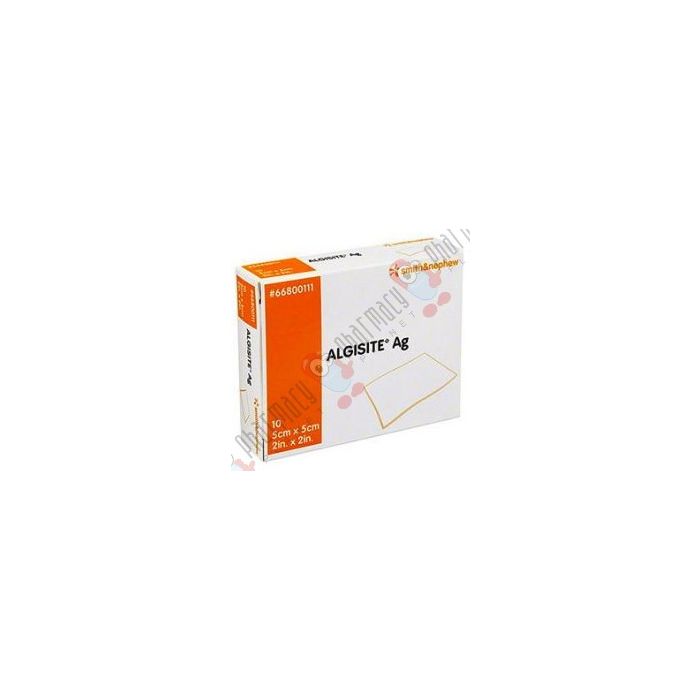
ALGISITE Ag Wound Dressing | Silver Alginate Antimicrobial Dressing for Infected & Exuding Wounds
Alginate dressings have been used in wound care for decades because of their natural ability to absorb wound fluid and conform to irregular wound shapes. ALGISITE Ag is a silver alginate dressing that combines the absorbent and gelling properties of calcium alginate fibres with ionic silver for antimicrobial wound infection management. It is designed for moderate to heavily exuding infected or at risk wounds including chronic wounds, burns, and traumatic wounds. The alginate fibres absorb exudate and form a soft moist gel in the wound, while ionic silver is released to act against a broad range of wound pathogens. No prescription is required.
What Is ALGISITE Ag?
ALGISITE Ag is a regulated Class IIb medical device from Smith+Nephew. It is a calcium alginate dressing impregnated with ionic silver. Calcium alginate is a naturally derived fibre produced from seaweed. The fibres are highly absorbent and, when they contact wound exudate, undergo a chemical reaction in which calcium ions in the alginate are exchanged for sodium ions in the wound fluid. This ion exchange causes the alginate fibres to soften and form a cohesive moist gel that conforms closely to the wound surface, including cavities and irregular wound beds.
ALGISITE Ag differs from the ACTICOAT range of dressings in both material and mechanism. The ACTICOAT range uses nanocrystalline silver deposited onto polyethylene mesh or polyester fabric. ALGISITE Ag uses ionic silver impregnated into alginate fibres. The antimicrobial silver is released as the gel forms, providing localised infection management at the wound surface. Both approaches use silver as the antimicrobial agent, but through different formulations and via different dressing materials.
ALGISITE Ag is indicated for use on moderate to heavily exuding infected or at risk chronic wounds including venous leg ulcers, diabetic foot ulcers, pressure ulcers, and cavity wounds. It is also suitable for acute wounds, partial thickness burns, and skin graft donor sites with significant exudate production. The gelling property of the dressing makes it particularly useful for cavity wounds and wound beds with an irregular surface where a flat sheet dressing cannot maintain close contact.
ALGISITE Ag is applied dry to the wound. The wound exudate activates the gel and silver release. Do not soak or pre wet the dressing before application. A gel residue will remain in the wound when the dressing is removed — this is normal and expected. Remove the residue by irrigation with sterile saline or sterile water before applying the next dressing.
How Does ALGISITE Ag Work?
Alginate Gel Formation and Exudate Absorption
When ALGISITE Ag contacts wound exudate, the calcium ions in the alginate fibres exchange with sodium ions in the wound fluid. This ion exchange reaction transforms the dry alginate fibres into a soft, cohesive moist gel. The gel conforms to the wound surface, filling irregularities and cavity areas, and maintains a moist wound environment. A moist wound environment is associated with improved healing conditions compared with a dry wound surface. The alginate gel structure also traps bacteria within its matrix, reducing the bacterial load at the wound surface.
Ionic Silver Antimicrobial Action
Ionic silver within the alginate fibres is released as the gel forms. Silver ions act on wound pathogens through multiple mechanisms: disrupting bacterial cell membranes, interfering with enzyme systems necessary for bacterial metabolism, and preventing bacterial DNA replication. This broad mechanism of action provides antimicrobial activity against a wide range of wound pathogens including Staphylococcus aureus, MRSA, Pseudomonas aeruginosa, Escherichia coli, and Candida species. The silver is released locally at the wound surface rather than being absorbed systemically in clinically significant amounts.
Moisture Balance in the Wound
The alginate gel maintains a balance of moisture at the wound surface. It absorbs excess exudate to prevent maceration of the periwound skin while retaining sufficient moisture at the wound bed to support tissue repair. When exudate levels are very high, the gel may reach capacity before the scheduled dressing change, requiring an earlier change. When exudate levels are lower, the gel maintains moist conditions at the wound surface throughout the wear period.
How to Apply ALGISITE Ag
Before Application
- Wash hands and use appropriate gloves.
- Clean the wound with sterile saline or as directed by your healthcare professional.
- Remove any loose debris or necrotic tissue as clinically appropriate.
- Dry the periwound skin and apply a skin barrier or protectant product to any macerated or at-risk skin around the wound margins.
- Remove ALGISITE Ag from its sterile packaging immediately before use.
- Do not pre wet or soak the dressing.
Application
- For flat wounds: place the dry dressing over the wound, ensuring it covers the wound bed and extends slightly beyond the wound margin.
- For cavity wounds: loosely pack the dry dressing into the cavity, filling the space but not packing it tightly. Leave approximately 20 percent of the cavity volume unfilled to allow for gel expansion as the dressing absorbs exudate. Ensure the packing can be retrieved at the next dressing change.
- Apply an appropriate secondary dressing to retain the ALGISITE Ag in place. Choose the secondary dressing based on exudate levels, wound location, and clinical preference.
- Label with the date and time of application.
Removal
ALGISITE Ag will have partially or fully gelled at the time of removal. This is expected. Gently lift any dry edges and irrigate the wound with sterile saline or sterile water to soften the gel and assist removal. Remove the gelled dressing carefully. Pieces may separate during removal — this is normal for alginate dressings. Irrigate the wound after removal to remove any gel residue remaining in the wound bed before applying the next dressing.
Gel residue after removal is normal and expected with alginate dressings. Always irrigate the wound with sterile saline or sterile water after removing ALGISITE Ag to clear the residue before assessing the wound and applying the next dressing. Do not mistake gel residue for slough or necrotic tissue.
Sizes and Pack Configurations Available
ALGISITE Ag 5cm x 5cm — Pack of 10
Suitable for smaller wounds, localised ulcers, digit wounds, small burn areas, and shallow cavity wounds. Pack of 10 individually sterile packed dressings. Suitable for clinical settings or for patients managing smaller wounds at home under clinical supervision. The 5cm x 5cm size can also be cut or folded to fit very small wounds or to pack narrow cavity areas.
ALGISITE Ag 10cm x 20cm — Pack of 5
Suitable for larger chronic wounds including venous leg ulcers, larger pressure ulcers, and moderate burn areas. Pack of 5 dressings. The 10cm x 20cm size can be cut to fit irregularly shaped wounds; ensure cut edges are adequately covered by the secondary dressing. For cavity wounds, the dressing can be cut into strips or pieces for packing. The pack of 5 is suitable for home use under clinical supervision or for clinical settings with lower volume requirements.
Safety Information and Precautions
Contraindications
- Do not use on patients with a known sensitivity or allergy to silver or to alginates.
- Do not use on dry wounds or wounds with no exudate. Alginate dressings require wound fluid to activate the gel formation mechanism. On dry wounds, the dressing will not gel and may adhere to the wound surface, causing trauma on removal.
- Do not use in conjunction with oil-based topical products directly under the dressing, as these impair silver ion release.
Precautions
- ALGISITE Ag is a single use product. Do not reuse or resterilise.
- Ensure all pieces of the dressing are removed at each dressing change, particularly for cavity wounds. A piece of retained dressing can act as a foreign body and impair healing. Irrigate the wound thoroughly after removal.
- Use with caution in wounds with very small openings where full retrieval of the dressing cannot be confirmed. Consider using a wound contact layer as an alternative in these situations.
- The dressing may cause grey or blue grey discolouration of the wound bed and periwound skin due to silver deposition. This is localised, expected, and generally resolves when silver dressing use is discontinued.
- Reassess the wound at each dressing change. If exudate levels fall and the dressing is no longer gelling adequately, consider switching to a less absorptive dressing.
- Do not use MRI scanning with ALGISITE Ag in place. Remove before MRI procedures.
- Silver dressings are not a substitute for systemic antibiotic therapy where there is spreading cellulitis, systemic infection, or sepsis.
- Use with caution in patients who are pregnant or breastfeeding. Seek clinical advice.
Adverse Effects
- Localised skin sensitivity or irritation at the wound margin. Discontinue if persistent.
- Discolouration of the wound and periwound skin as described above.
- Dressing adherence to a dry wound if exudate levels fall significantly. Irrigate before removal to prevent trauma.
Who Is ALGISITE Ag Suitable For?
ALGISITE Ag Is Suitable For Use On:
- Moderate to heavily exuding chronic wounds including venous leg ulcers, diabetic foot ulcers, and pressure ulcers where infection is present or at risk.
- Cavity wounds and wounds with irregular or deep wound beds where the gelling property of alginate provides better wound contact than flat sheet dressings.
- Partial thickness burns producing moderate to heavy exudate.
- Acute traumatic wounds with significant exudate and infection risk.
- Skin graft donor sites with significant exudate production.
- Adults and children under healthcare professional supervision.
ALGISITE Ag Is Not Suitable For:
- Dry or minimally exuding wounds — the alginate requires wound fluid to gel. On dry wounds, use a dressing that maintains moisture rather than absorbs it.
- Wounds with very small or narrow openings where dressing retrieval cannot be confirmed.
- Patients with known allergy to silver or alginates.
ALGISITE Ag vs ACTICOAT Moisture Control
Both ALGISITE Ag and ACTICOAT Moisture Control are designed for infected or at risk exuding wounds and both are applied dry. The key difference is the dressing material and its physical behaviour. ALGISITE Ag uses alginate fibres that gel on contact with wound exudate, conforming to wound cavities and irregular surfaces. ACTICOAT Moisture Control uses an absorbent inner core with a silver-coated outer layer and remains as a sheet dressing throughout wear. ALGISITE Ag is particularly suited to cavity wounds and wounds with irregular beds. ACTICOAT Moisture Control is suited to flat and moderate surface wounds. Both use silver as the antimicrobial agent but through different formulations.
Where to Buy and How to Order
ALGISITE Ag is a regulated medical device and does not require a prescription. It can be purchased directly through Pharmacy Planet without a clinical consultation. It is available in two pack sizes: 5cm x 5cm (pack of 10) and 10cm x 20cm (pack of 5).
Pharmacy Planet is a GPhC registered online pharmacy stocking a range of wound care products including antimicrobial dressings and secondary dressings. Our pharmacists are available to advise on product selection for specific wound types. For complex wounds, cavity wounds, or wounds that are not healing as expected, seek clinical assessment from a tissue viability nurse, district nurse, or GP alongside your dressing purchases.
Storage and Handling
Store in a cool, dry place away from direct sunlight and moisture. Store below 25°C. Keep in the original sealed packaging until immediately before use. Each dressing is individually sterile packed. Do not use if packaging is damaged or compromised. Check the expiry date before use. Do not use after the expiry date. Once opened, use immediately. Keep out of the reach of children. Dispose of used dressings as clinical waste in accordance with local guidelines.
Why Choose Pharmacy Planet?
Pharmacy Planet is a GPhC registered online pharmacy providing access to professional grade wound care products including ALGISITE Ag, the full ACTICOAT range, and a comprehensive selection of primary and secondary dressings. We provide clear, clinically accurate product information to support wound care decisions. All products are genuine and sourced through regulated supply chains. Our pharmacists are available to advise on choosing the most appropriate dressing for a specific wound type, exudate level, and wound location. We are committed to honest, patient centred wound care information.
References
- Smith+Nephew. ALGISITE Ag Silver Alginate Wound Dressing — Instructions for Use. Smith+Nephew Medical Ltd. https://www.smith-nephew.com. Accessed May 2026.
- Wounds UK. Best Practice Statement: Wound exudate — effective assessment and management. https://www.wounds-uk.com. Accessed May 2026.
- World Union of Wound Healing Societies (WUWHS). Principles of best practice: wound exudate and the role of dressings. https://wuwhs.net. Accessed May 2026.
- National Institute for Health and Care Excellence (NICE). Wound care products — Drug Tariff prescribing and selection. https://www.nice.org.uk. Accessed May 2026.
Alginate dressings have been used in wound care for decades because of their natural ability to absorb wound fluid and conform to irregular wound shapes. ALGISITE Ag is a silver alginate dressing that combines the absorbent and gelling properties of calcium alginate fibres with ionic silver for antimicrobial wound infection management. It is designed for moderate to heavily exuding infected or at risk wounds including chronic wounds, burns, and traumatic wounds. The alginate fibres absorb exudate and form a soft moist gel in the wound, while ionic silver is released to act against a broad range of wound pathogens. No prescription is required.
ALGISITE Ag is a regulated Class IIb medical device from Smith+Nephew. It is a calcium alginate dressing impregnated with ionic silver. Calcium alginate is a naturally derived fibre produced from seaweed. The fibres are highly absorbent and, when they contact wound exudate, undergo a chemical reaction in which calcium ions in the alginate are exchanged for sodium ions in the wound fluid. This ion exchange causes the alginate fibres to soften and form a cohesive moist gel that conforms closely to the wound surface, including cavities and irregular wound beds.
ALGISITE Ag differs from the ACTICOAT range of dressings in both material and mechanism. The ACTICOAT range uses nanocrystalline silver deposited onto polyethylene mesh or polyester fabric. ALGISITE Ag uses ionic silver impregnated into alginate fibres. The antimicrobial silver is released as the gel forms, providing localised infection management at the wound surface. Both approaches use silver as the antimicrobial agent, but through different formulations and via different dressing materials.
ALGISITE Ag is indicated for use on moderate to heavily exuding infected or at risk chronic wounds including venous leg ulcers, diabetic foot ulcers, pressure ulcers, and cavity wounds. It is also suitable for acute wounds, partial thickness burns, and skin graft donor sites with significant exudate production. The gelling property of the dressing makes it particularly useful for cavity wounds and wound beds with an irregular surface where a flat sheet dressing cannot maintain close contact.
ALGISITE Ag is applied dry to the wound. The wound exudate activates the gel and silver release. Do not soak or pre wet the dressing before application. A gel residue will remain in the wound when the dressing is removed — this is normal and expected. Remove the residue by irrigation with sterile saline or sterile water before applying the next dressing.
Alginate Gel Formation and Exudate Absorption
When ALGISITE Ag contacts wound exudate, the calcium ions in the alginate fibres exchange with sodium ions in the wound fluid. This ion exchange reaction transforms the dry alginate fibres into a soft, cohesive moist gel. The gel conforms to the wound surface, filling irregularities and cavity areas, and maintains a moist wound environment. A moist wound environment is associated with improved healing conditions compared with a dry wound surface. The alginate gel structure also traps bacteria within its matrix, reducing the bacterial load at the wound surface.
Ionic Silver Antimicrobial Action
Ionic silver within the alginate fibres is released as the gel forms. Silver ions act on wound pathogens through multiple mechanisms: disrupting bacterial cell membranes, interfering with enzyme systems necessary for bacterial metabolism, and preventing bacterial DNA replication. This broad mechanism of action provides antimicrobial activity against a wide range of wound pathogens including Staphylococcus aureus, MRSA, Pseudomonas aeruginosa, Escherichia coli, and Candida species. The silver is released locally at the wound surface rather than being absorbed systemically in clinically significant amounts.
Moisture Balance in the Wound
The alginate gel maintains a balance of moisture at the wound surface. It absorbs excess exudate to prevent maceration of the periwound skin while retaining sufficient moisture at the wound bed to support tissue repair. When exudate levels are very high, the gel may reach capacity before the scheduled dressing change, requiring an earlier change. When exudate levels are lower, the gel maintains moist conditions at the wound surface throughout the wear period.
Before Application
- Wash hands and use appropriate gloves.
- Clean the wound with sterile saline or as directed by your healthcare professional.
- Remove any loose debris or necrotic tissue as clinically appropriate.
- Dry the periwound skin and apply a skin barrier or protectant product to any macerated or at-risk skin around the wound margins.
- Remove ALGISITE Ag from its sterile packaging immediately before use.
- Do not pre wet or soak the dressing.
Application
- For flat wounds: place the dry dressing over the wound, ensuring it covers the wound bed and extends slightly beyond the wound margin.
- For cavity wounds: loosely pack the dry dressing into the cavity, filling the space but not packing it tightly. Leave approximately 20 percent of the cavity volume unfilled to allow for gel expansion as the dressing absorbs exudate. Ensure the packing can be retrieved at the next dressing change.
- Apply an appropriate secondary dressing to retain the ALGISITE Ag in place. Choose the secondary dressing based on exudate levels, wound location, and clinical preference.
- Label with the date and time of application.
Removal
ALGISITE Ag will have partially or fully gelled at the time of removal. This is expected. Gently lift any dry edges and irrigate the wound with sterile saline or sterile water to soften the gel and assist removal. Remove the gelled dressing carefully. Pieces may separate during removal — this is normal for alginate dressings. Irrigate the wound after removal to remove any gel residue remaining in the wound bed before applying the next dressing.
Gel residue after removal is normal and expected with alginate dressings. Always irrigate the wound with sterile saline or sterile water after removing ALGISITE Ag to clear the residue before assessing the wound and applying the next dressing. Do not mistake gel residue for slough or necrotic tissue.
ALGISITE Ag 5cm x 5cm — Pack of 10
Suitable for smaller wounds, localised ulcers, digit wounds, small burn areas, and shallow cavity wounds. Pack of 10 individually sterile packed dressings. Suitable for clinical settings or for patients managing smaller wounds at home under clinical supervision. The 5cm x 5cm size can also be cut or folded to fit very small wounds or to pack narrow cavity areas.
ALGISITE Ag 10cm x 20cm — Pack of 5
Suitable for larger chronic wounds including venous leg ulcers, larger pressure ulcers, and moderate burn areas. Pack of 5 dressings. The 10cm x 20cm size can be cut to fit irregularly shaped wounds; ensure cut edges are adequately covered by the secondary dressing. For cavity wounds, the dressing can be cut into strips or pieces for packing. The pack of 5 is suitable for home use under clinical supervision or for clinical settings with lower volume requirements.
Contraindications
- Do not use on patients with a known sensitivity or allergy to silver or to alginates.
- Do not use on dry wounds or wounds with no exudate. Alginate dressings require wound fluid to activate the gel formation mechanism. On dry wounds, the dressing will not gel and may adhere to the wound surface, causing trauma on removal.
- Do not use in conjunction with oil-based topical products directly under the dressing, as these impair silver ion release.
Precautions
- ALGISITE Ag is a single use product. Do not reuse or resterilise.
- Ensure all pieces of the dressing are removed at each dressing change, particularly for cavity wounds. A piece of retained dressing can act as a foreign body and impair healing. Irrigate the wound thoroughly after removal.
- Use with caution in wounds with very small openings where full retrieval of the dressing cannot be confirmed. Consider using a wound contact layer as an alternative in these situations.
- The dressing may cause grey or blue grey discolouration of the wound bed and periwound skin due to silver deposition. This is localised, expected, and generally resolves when silver dressing use is discontinued.
- Reassess the wound at each dressing change. If exudate levels fall and the dressing is no longer gelling adequately, consider switching to a less absorptive dressing.
- Do not use MRI scanning with ALGISITE Ag in place. Remove before MRI procedures.
- Silver dressings are not a substitute for systemic antibiotic therapy where there is spreading cellulitis, systemic infection, or sepsis.
- Use with caution in patients who are pregnant or breastfeeding. Seek clinical advice.
Adverse Effects
- Localised skin sensitivity or irritation at the wound margin. Discontinue if persistent.
- Discolouration of the wound and periwound skin as described above.
- Dressing adherence to a dry wound if exudate levels fall significantly. Irrigate before removal to prevent trauma.
ALGISITE Ag Is Suitable For Use On:
- Moderate to heavily exuding chronic wounds including venous leg ulcers, diabetic foot ulcers, and pressure ulcers where infection is present or at risk.
- Cavity wounds and wounds with irregular or deep wound beds where the gelling property of alginate provides better wound contact than flat sheet dressings.
- Partial thickness burns producing moderate to heavy exudate.
- Acute traumatic wounds with significant exudate and infection risk.
- Skin graft donor sites with significant exudate production.
- Adults and children under healthcare professional supervision.
ALGISITE Ag Is Not Suitable For:
- Dry or minimally exuding wounds — the alginate requires wound fluid to gel. On dry wounds, use a dressing that maintains moisture rather than absorbs it.
- Wounds with very small or narrow openings where dressing retrieval cannot be confirmed.
- Patients with known allergy to silver or alginates.
ALGISITE Ag vs ACTICOAT Moisture Control
Both ALGISITE Ag and ACTICOAT Moisture Control are designed for infected or at risk exuding wounds and both are applied dry. The key difference is the dressing material and its physical behaviour. ALGISITE Ag uses alginate fibres that gel on contact with wound exudate, conforming to wound cavities and irregular surfaces. ACTICOAT Moisture Control uses an absorbent inner core with a silver-coated outer layer and remains as a sheet dressing throughout wear. ALGISITE Ag is particularly suited to cavity wounds and wounds with irregular beds. ACTICOAT Moisture Control is suited to flat and moderate surface wounds. Both use silver as the antimicrobial agent but through different formulations.
ALGISITE Ag is a regulated medical device and does not require a prescription. It can be purchased directly through Pharmacy Planet without a clinical consultation. It is available in two pack sizes: 5cm x 5cm (pack of 10) and 10cm x 20cm (pack of 5).
Pharmacy Planet is a GPhC registered online pharmacy stocking a range of wound care products including antimicrobial dressings and secondary dressings. Our pharmacists are available to advise on product selection for specific wound types. For complex wounds, cavity wounds, or wounds that are not healing as expected, seek clinical assessment from a tissue viability nurse, district nurse, or GP alongside your dressing purchases.
Store in a cool, dry place away from direct sunlight and moisture. Store below 25°C. Keep in the original sealed packaging until immediately before use. Each dressing is individually sterile packed. Do not use if packaging is damaged or compromised. Check the expiry date before use. Do not use after the expiry date. Once opened, use immediately. Keep out of the reach of children. Dispose of used dressings as clinical waste in accordance with local guidelines.
Pharmacy Planet is a GPhC registered online pharmacy providing access to professional grade wound care products including ALGISITE Ag, the full ACTICOAT range, and a comprehensive selection of primary and secondary dressings. We provide clear, clinically accurate product information to support wound care decisions. All products are genuine and sourced through regulated supply chains. Our pharmacists are available to advise on choosing the most appropriate dressing for a specific wound type, exudate level, and wound location. We are committed to honest, patient centred wound care information.
References
- Smith+Nephew. ALGISITE Ag Silver Alginate Wound Dressing — Instructions for Use. Smith+Nephew Medical Ltd. https://www.smith-nephew.com. Accessed May 2026.
- Wounds UK. Best Practice Statement: Wound exudate — effective assessment and management. https://www.wounds-uk.com. Accessed May 2026.
- World Union of Wound Healing Societies (WUWHS). Principles of best practice: wound exudate and the role of dressings. https://wuwhs.net. Accessed May 2026.
- National Institute for Health and Care Excellence (NICE). Wound care products — Drug Tariff prescribing and selection. https://www.nice.org.uk. Accessed May 2026.
ALGISITE Ag is a silver alginate dressing used for moderate to heavily exuding infected or at risk wounds. It is suitable for chronic wounds including venous leg ulcers, diabetic foot ulcers, pressure ulcers, and cavity wounds, as well as burns, acute traumatic wounds, and skin graft donor sites. It combines the absorbent and gelling properties of calcium alginate with ionic silver for antimicrobial infection management. It is a Class IIb regulated medical device and does not require a prescription.
ALGISITE Ag and the ACTICOAT range both use silver as the antimicrobial agent but through different dressing materials and mechanisms. ALGISITE Ag uses calcium alginate fibres impregnated with ionic silver. The fibres gel on contact with wound exudate, conforming to the wound surface and releasing silver ions as the gel forms. ACTICOAT dressings use nanocrystalline silver deposited onto polyethylene mesh or polyester fabric. ALGISITE Ag is particularly suited to cavity wounds and irregular wound beds because the gel fills and conforms to the wound shape. ACTICOAT products maintain their sheet structure throughout wear.
Gelling is the normal and expected behaviour of alginate dressings. When calcium alginate fibres contact wound exudate, calcium ions in the fibres exchange with sodium ions in the wound fluid. This chemical reaction transforms the dry fibres into a soft, moist gel that conforms closely to the wound surface. The gel maintains a moist wound environment and traps bacteria within its structure. It is not a sign that the dressing has broken down or failed. Gel residue remaining in the wound after removal should be irrigated away with sterile saline before the next dressing is applied.
No. ALGISITE Ag is applied dry to the wound. The wound exudate activates the gel formation and silver ion release. Pre-wetting the dressing before application is not necessary and could alter the absorption and gelling properties of the alginate. Simply place the dry dressing on or into the wound and secure with an appropriate secondary dressing. If you are packing a cavity wound, loosely fill the cavity with the dry dressing, leaving about 20 percent of the space for the gel to expand as it absorbs exudate.
Irrigate the wound with sterile saline or sterile water before and during removal to soften the gelled dressing. This reduces adherence and makes removal more comfortable. Gently lift the softened dressing from the wound edges. It may come away in pieces — this is normal for alginate dressings. After removal, irrigate the wound thoroughly to clear any gel residue. If the dressing has dried onto the wound surface because exudate levels have fallen, more extensive irrigation will be needed before removal. Do not forcibly pull a dried alginate dressing from the wound.
Yes. ALGISITE Ag is well suited to cavity wounds because the alginate fibres gel and conform to the shape of the cavity when they contact wound exudate. This gives better wound contact than a flat sheet dressing, which cannot fill a cavity. When packing a cavity wound, loosely fill the cavity with the dry dressing. Do not pack tightly. Leave approximately 20 percent of the cavity unfilled to allow space for the gel to expand as it absorbs exudate. Ensure the dressing is placed so it can be fully retrieved at the next dressing change.
Yes. ALGISITE Ag is commonly used for venous leg ulcers producing moderate to heavy exudate with signs of infection or high infection risk. The combination of ionic silver and alginate gel addresses both the antimicrobial and exudate management needs of infected or at-risk leg ulcers. Leg ulcer management should include compression therapy where clinically appropriate and should be carried out under the supervision of a tissue viability nurse or district nurse. Seek clinical guidance on whether ALGISITE Ag is the most appropriate dressing choice for your specific ulcer characteristics.
No. ALGISITE Ag is a regulated medical device and does not require a prescription. It can be purchased directly from Pharmacy Planet without a clinical consultation in two pack sizes: 5cm x 5cm (pack of 10) and 10cm x 20cm (pack of 5). For complex or non-healing wounds, particularly cavity wounds, diabetic foot ulcers, or infected wounds with signs of systemic involvement, seek clinical assessment from a tissue viability nurse, district nurse, or GP alongside your dressing purchases.

clinical consultation
Answer a few questions on your health and your fitness goals.

assessment
Our clinicians will review your clinical questionnaire to make sure treatment is right for you.

aboard!
Once approved, you will access our wealth of experience and resources curated by our team and begin your clinical journey.
Start your journey with us
Need Help?

Start your weight loss journey heading in the right direction. Our team are here to help. Whether you’re unsure about which medicine is right for you or need help navigating the world of weight loss drugs, our team are on hand to help you make the right decision. We can put you in touch with one of our experienced weight loss clinicians so you can be sure you’re making the best decision with the most accurate information.
To get in touch, contact our Customer Service team on 0800 978 8956 or email headoffice@pharmacyplanet.com.

Review By
HARMINDER ‘HARMY’ KAUR
Last Updated On : Mar 13 2026
BSc(hons) Pharmacy
GPhC Number: 2061107

Authored By
GURDEV SEHMI
Last Reviewed On : Mar 23 2026
BSc Pharm, MRPharmS, Independent Prescriber, Superintendent Pharmacist, Clinical Lead
GPhC Number: 2050925