






Our clinicians will assess your consultation to ensure your health and safety is at the heart of your treatment plan.


Answer a few questions on your health and your fitness goals.

Our clinicians will review your clinical questionnaire to make sure treatment is right for you.

Once approved, you will access our wealth of experience and resources curated by our team and begin your clinical journey.
Our clinicians will assess your consultation to ensure your health and safety is at the heart of your treatment plan.
Once approved, your medicine is shipped using 24-hour delivery. All our orders are dispatched in our plain and discreet packaging.
Throughout the program, our clinicians and coaches will be by your side to ensure you experience minimal side effects, find the perfect dosage for your needs, and address any questions you may have.
Whether you experience side effects you'd like to address or simply need a break, we empower you to take control of your journey. We'll pick things back up when you're ready.


Thrush is a highly common fungal infection caused by an overgrowth of Candida albicans, a specific kind of yeast. Candida yeast can affect various parts of the body, including the mouth, genitals and skin folds.
Thrush can be caused by anything which disturbs the natural balance of microorganisms. This can cause Candida yeast to multiply. Thrush is usually triggered by antibiotic use, hormonal changes (like pregnancy or menopause), a weakened immune system, uncontrolled diabetes, denture wearing and even not rinsing your mouth after frequent inhaler use.
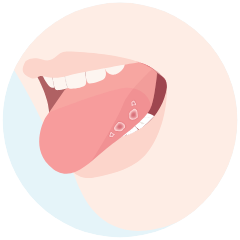
Depending on what part of your body is affected by thrush, your symptoms can vary. For oral thrush, you can see white patches on your tongue, inner cheeks or experience soreness and difficulty swallowing. With vaginal thrush, you can experience itching, redness, swelling and a thick white discharge which can look like cottage cheese. For penile thrush, you can have redness, irritation and a white discharge beneath the foreskin.
Thrush isn’t usually considered contagious. However, thrush can be transmitted through direct contact, like through breastfeeding or sexual intercourse. You should always make sure to know the signs and symptoms of thrush to avoid passing it on. .
Thrush is usually diagnosed by your GP, clinician or doctor. What usually occurs is that the doctor will take a swab to the affected area and test to see if there is any Candida yeast on the swab so they can diagnose you correctly and provide you with the appropriate treatment.
To prevent thrush, you can maintain good oral and genital hygiene to avoid a buildup of Candida yeast. You can also do your best to manage underlying health conditions like diabetes, which can cause thrush, avoid using antibiotics unnecessarily, make sure that the underwear you’re wearing is breathable and preferably cotton-based based and do not wear any tight-fitting clothing that may promote the growth of bacteria.