




Our clinicians will assess your consultation to ensure your health and safety is at the heart of your treatment plan.


Answer a few questions on your health and your fitness goals.

Our clinicians will review your clinical questionnaire to make sure treatment is right for you.

Once approved, you will access our wealth of experience and resources curated by our team and begin your clinical journey.

It is the prescribers duty to ensure that the medicine is being used safely and appropriately. please answer a few questions about yourself to help us process your request.
Customer Service Team
Our customer service team is on hand Monday-Friday to help you with your queries.
Please call us on 08009788956 or
email us at: [email protected]
Levothyroxine is used in the treatment of hypothyroidism (low level of thyroid hormone). Levothyr...
Our clinicians will assess your consultation to ensure your health and safety is at the heart of your treatment plan.
Once approved, your medicine is shipped using 24-hour delivery. All our orders are dispatched in our plain and discreet packaging.
Throughout the program, our clinicians and coaches will be by your side to ensure you experience minimal side effects, find the perfect dosage for your needs, and address any questions you may have.
Whether you experience side effects you'd like to address or simply need a break, we empower you to take control of your journey. We'll pick things back up when you're ready.


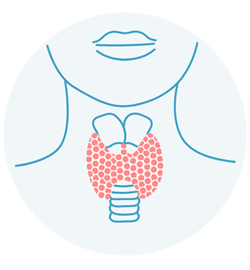
An underactive thyroid, also known as hypothyroidism, is when your thyroid gland is unable to produce enough thyroid hormones. These specific hormones help to regulate your body’s metabolism. So, when the levels of this hormone are imbalanced, it can lead to certain symptoms like fatigue, weight gain and temperature sensitivity, especially to the cold.
Some of the most common symptoms of an underactive thyroid can include: fatigue, weight gain, intolerance to the cold, dry skin, constipation, depression, slow heart rate, memory issues, hair thinning and heavy or irregular menstrual periods.
Several factors can contribute to hypothyroidism, or an underactive thyroid. This can include autoimmune diseases like Hashimoto’s thyroiditis, certain medicines, radiation therapy applied to the neck, thyroid surgery, iodine deficiency or congenital conditions which are present at birth.
Hypothyroidism is usually diagnosed through blood tests. During these blood tests, they will measure your Thyroid-stimulating hormone (TSH) levels and your Thyroxine (T4) levels. If your TSH is elevated and your T4 is low, then this can indicate that you have an underactive thyroid.
There is no cure for hypothyroidism at the moment, however, it can be managed effectively with daily thyroid hormone replacement therapy. Regular monitoring of this can ensure that the dose of medicine you receive is appropriate to the severity of your condition and the symptoms displayed.
If you do not treat your hypothyroidism, you may face detrimental health consequences. This can include heart problems, infertility, enlarged thyroid, myxedema (severe hypothyroidism) – which is a rare circumstance, but can be very life threatening. Make sure to get a diagnosis as soon as you see signs and symptoms to prevent complications.