








Facebook Pixel
New Patients – Get 10% Off Your First Consultation with Code: NEW10 at Checkout

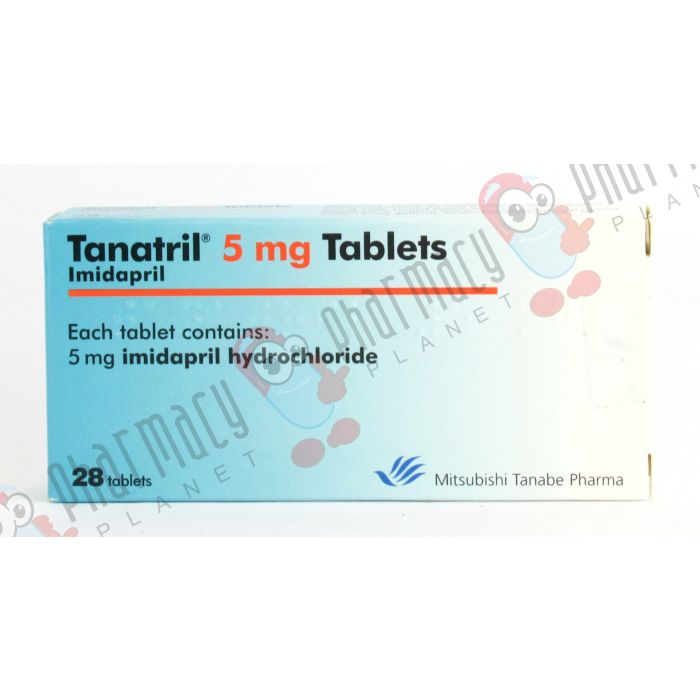
Tanatril is a prescription medication used in the treatment of high blood pressure (hypertension). Tanatril belongs to a group of medicines called ACE inhibitors (angiotensin-converting enzyme inhibitors). If you have high blood pressure, Tanatril works by dilating the blood vessels, allowing the blood to circulate more easily. As blood pressure depends on the diameter of the blood vessels, it will decrease with the help of Tanatril. It will also be easier for your heart to pump blood through the vessels to the entire body. Tanatril is available in 5 mg and 10 mg strengths. If you are looking to buy Tanatril online, you can choose Pharmacy Planet in the UK.

Consult
Select
Checkout
01
Select

the items you wish
to order

02
Order reviewed

by our qualified
prescriber

03
Delivered

to your door step

Your Selection

Please use the options provided to make your final selection.
prodName
Tanatril
£38
Total
Consult
Select
Checkout
Please make a selection

Please note that whilst you are able to request the medicine strength and size required,
we will only be able to send on approval from our in house pharmacist.

Starts at £38.00
Price Comparison

Select your preferred options and see the best price

PackPrice (£)
-5mg28 Tablets38.00
-5mg56 Tablets50.00
-5mg84 Tablets59.00
-10mg28 Tablets38.00
-10mg56 Tablets50.00
-10mg84 Tablets59.00
-20mg28 Tablets38.00
-20mg56 Tablets50.00
-20mg84 Tablets59.00

It looks like you missed filling in questions from the last consultation.Click Here to submit your response.
  • No hidden fees

  • Secure checkout

  • UK Regulated online pharmacy

  • Trusted by over 100,000+ customers

What is Tanatril?

Tanatril comes in packs of 14 or 28 tablets. Each tablet contains imidapril hydrochloride. This Hypertension Medication belongs to a group of medicines called ACE inhibitors (angiotensin-converting enzyme), that is, medicines that lower blood pressure. Tanatril is indicated in the treatment of high blood pressure.

How does it work?

This high blood pressure medication works thanks to its main active ingredient, Imidapril. The hypotensive effect of imidapril on hypertension seems to be due mainly to the suppression of the renin-angiotensin-aldosterone system in plasma. Renin is an enzyme endogenously synthesized by the kidneys and deposited in the bloodstream, where it converts angiotensinogen to angiotensin I, a relatively inactive decapeptide. TO angiotensin I is then converted to angiotensin II by the action of the enzyme converter of angiotensin, a peptidyl peptidase. Angiotensin II is a powerful vasoconstrictor, responsible for vasoconstriction and hypertension, as well as stimulation of the adrenal gland to secrete aldosterone. ACE inhibition decreases the plasma concentration of angiotensin II, which results in a decrease of vasopressor activity and in a reduction of aldosterone secretion. Although this last decrease is small, there may be slight increases in the serum potassium levels, along with sodium and fluid loss. The suppression of negative feedback of angiotensin II on renin secretion increases the plasma renin activity.

Another function of the converting enzyme is to degrade bradykinin, a powerful peptide. vasodepressor of the kinin group, in inactive metabolites. Therefore, the inhibition of ECA increases the activity of the circulating and local system of kallikrein-kinin, which contributes to peripheral vasodilation by activating the prostaglandin system. it's possible that this mechanism participates in the hypotensive effect of ACE inhibitors and is responsible for some adverse effects.

What are the benefits of taking it?

Imidapril Qualigen belongs to a group of medicines called ACE inhibitors (angiotensin-converting enzymes). Imidapril Qualigen is indicated for the treatment of high blood pressure (hypertension).

How do I use it and its dosage?

Adults

Treatment should be started with 5 mg once a day. The medicine has to be taken orally. If optimal control of blood pressure is not achieved after at least 3 weeks of treatment, the daily dose should be increased to 10 mg, which has been determined to be the most effective daily dose. However, in a small number of patients, it may be necessary to increase the dose daily at 20 mg (maximum recommended dose) or, preferably, consider treatment of combination with a diuretic. It has not been established whether hypertensive patients would benefit from a combination of imidapril with other antihypertensive treatments.

It is recommended to take the tablets at the same time of day, 15 minutes before meals, conditions for which efficacy has already been demonstrated.

Elderly patients (65 years or older)

The medicine has to be taken orally. The initial dose is 2.5 mg once a day. This dose should be adjusted according to the response of the blood pressure. The maximum recommended dose is 10 mg once a day.

Side effects & precautions

The frequency of adverse reactions in hypertensive subjects was 34% with imidapril versus 36% with placebo.

The most common effects in the imidapril group were: cough, dizziness, fatigue/drowsiness, dyspepsia, and vomiting.

The unwanted effects observed during treatment with imidapril or other ACE inhibitors are as follows.

Investigations (biological abnormalities):

Decreases in hemoglobin, hematocrit, platelet, and leukocyte counts, as well as increases in liver enzymes, bilirubinemia, and creatine phosphokinase (CPK) levels have been reported in some patients. As imidapril decreases aldosterone secretion, an increase in serum potassium is possible. An increase in the level of urea in the blood and in serum creatinemia, reversible after stopping treatment, have been observed, particularly in the case of renal failure.

Cardiac disorders:

Severe hypotension is possible at the start of treatment or after increasing the dose, in certain risk groups. Hypotension may be accompanied by symptoms such as dizziness, a feeling of weakness, visual disturbances, and, rarely, disorders of consciousness (syncope). There have been some reports of tachycardia, palpitations, arrhythmia, angina, myocardial infarction, transient ischemic attack, and cerebral hemorrhage during hypotension while receiving ACE therapy.

Blood and lymphatic system:

Agranulocytosis, thrombocytopenia, pancytopenia, and anemia have been reported rarely in patients treated with ACE inhibitors. Some cases of hemolytic anemia under treatment with other ACE inhibitors have been reported in patients with congenital G-6-PD deficiency.

Nervous system disorders:

Dizziness, tiredness, and weakness have sometimes been reported. In rare cases, depression, sleep disturbances, paraesthesia, impotence, balance disturbances, mental confusion, tinnitus, blurred vision, headache, and taste abnormalities may be seen.

Respiratory, thoracic, and mediastinal disorders:

ACE inhibitors have been shown to cause cough quite frequently. In rare cases, dyspnea, sinusitis, rhinitis, glossitis, bronchitis, bronchospasm, or angioedema (angioedema) of the upper respiratory tract and very rare cases of alveolitis / allergic pneumonia may be observed. eosinophils have been reported.

Gastrointestinal disorders:

Diarrhea and nausea have been reported occasionally. In rare cases, vomiting, gastritis, abdominal pain, constipation, dry mouth, cholestatic jaundice, hepatitis, pancreatitis, and ileus may be observed.

Intestinal angioedema has been reported rarely with symptoms of abdominal pain with or without nausea or vomiting.

Renal and urinals:

In rare cases, kidney failure can occur or worsen. Acute kidney failure has been described with treatment with other ACE inhibitors.

Skin and subcutaneous tissue disorders:

In rare cases, allergy and hypersensitivity reactions such as rash, itching, rash, and urticaria have been reported. Undertreatment with ACE inhibitors, cases of erythema multiforme, Stevens-Johnson syndrome, toxic epidermal necrosis, psoriatic efflorescence, and alopecia have been reported. Skin signs may be accompanied by fever, myalgia, arthralgia, eosinophilia, and/or elevated levels of antinuclear antibodies. Like other ACE inhibitors, imidapril can induce angioedema (angioedema) that affects the face and oropharyngeal tissues.

Hepatobiliary disorders:

Patients treated with ACE inhibitors have developed jaundice or marked increases in liver enzymes.

Buying Tanatril online

You can buy Tanatril online through one of the UK’s leading online pharmacies, Pharmacy Planet. It's easy and convenient. You will need to fill out a short assessment and the item will be delivered directly to your door. If you want to buy these blood pressure tablets online, use Pharmacy Planet, a UK pharmacy you can trust.

Tanatril: Drug Interaction

Certain drugs can interact with Tanatril and may result in side effects or reduced effectiveness of the medication.

Some of these medications include:

  • Potassium-sparing diuretics like spironolactone and eplerenone
  • Antidiabetic drugs
  • Tacrolimus, co-trimoxazole
  • Any other blood pressure medication
  • Lithium

The list doesn’t cover all the medications, so consult with your healthcare provider for more details.

Who can use Tanatril?

Tanatril is generally prescribed for adults with hypertension. It should not be given to children and adolescents under 17 years of age.

LINKS

Tanatril comes in packs of 14 or 28 tablets. Each tablet contains imidapril hydrochloride. This Hypertension Medication belongs to a group of medicines called ACE inhibitors (angiotensin-converting enzyme), that is, medicines that lower blood pressure. Tanatril is indicated in the treatment of high blood pressure.

This high blood pressure medication works thanks to its main active ingredient, Imidapril. The hypotensive effect of imidapril on hypertension seems to be due mainly to the suppression of the renin-angiotensin-aldosterone system in plasma. Renin is an enzyme endogenously synthesized by the kidneys and deposited in the bloodstream, where it converts angiotensinogen to angiotensin I, a relatively inactive decapeptide. TO angiotensin I is then converted to angiotensin II by the action of the enzyme converter of angiotensin, a peptidyl peptidase. Angiotensin II is a powerful vasoconstrictor, responsible for vasoconstriction and hypertension, as well as stimulation of the adrenal gland to secrete aldosterone. ACE inhibition decreases the plasma concentration of angiotensin II, which results in a decrease of vasopressor activity and in a reduction of aldosterone secretion. Although this last decrease is small, there may be slight increases in the serum potassium levels, along with sodium and fluid loss. The suppression of negative feedback of angiotensin II on renin secretion increases the plasma renin activity.

Another function of the converting enzyme is to degrade bradykinin, a powerful peptide. vasodepressor of the kinin group, in inactive metabolites. Therefore, the inhibition of ECA increases the activity of the circulating and local system of kallikrein-kinin, which contributes to peripheral vasodilation by activating the prostaglandin system. it's possible that this mechanism participates in the hypotensive effect of ACE inhibitors and is responsible for some adverse effects.

Imidapril Qualigen belongs to a group of medicines called ACE inhibitors (angiotensin-converting enzymes). Imidapril Qualigen is indicated for the treatment of high blood pressure (hypertension).

Adults

Treatment should be started with 5 mg once a day. The medicine has to be taken orally. If optimal control of blood pressure is not achieved after at least 3 weeks of treatment, the daily dose should be increased to 10 mg, which has been determined to be the most effective daily dose. However, in a small number of patients, it may be necessary to increase the dose daily at 20 mg (maximum recommended dose) or, preferably, consider treatment of combination with a diuretic. It has not been established whether hypertensive patients would benefit from a combination of imidapril with other antihypertensive treatments.

It is recommended to take the tablets at the same time of day, 15 minutes before meals, conditions for which efficacy has already been demonstrated.

Elderly patients (65 years or older)

The medicine has to be taken orally. The initial dose is 2.5 mg once a day. This dose should be adjusted according to the response of the blood pressure. The maximum recommended dose is 10 mg once a day.

The frequency of adverse reactions in hypertensive subjects was 34% with imidapril versus 36% with placebo.

The most common effects in the imidapril group were: cough, dizziness, fatigue/drowsiness, dyspepsia, and vomiting.

The unwanted effects observed during treatment with imidapril or other ACE inhibitors are as follows.

Investigations (biological abnormalities):

Decreases in hemoglobin, hematocrit, platelet, and leukocyte counts, as well as increases in liver enzymes, bilirubinemia, and creatine phosphokinase (CPK) levels have been reported in some patients. As imidapril decreases aldosterone secretion, an increase in serum potassium is possible. An increase in the level of urea in the blood and in serum creatinemia, reversible after stopping treatment, have been observed, particularly in the case of renal failure.

Cardiac disorders:

Severe hypotension is possible at the start of treatment or after increasing the dose, in certain risk groups. Hypotension may be accompanied by symptoms such as dizziness, a feeling of weakness, visual disturbances, and, rarely, disorders of consciousness (syncope). There have been some reports of tachycardia, palpitations, arrhythmia, angina, myocardial infarction, transient ischemic attack, and cerebral hemorrhage during hypotension while receiving ACE therapy.

Blood and lymphatic system:

Agranulocytosis, thrombocytopenia, pancytopenia, and anemia have been reported rarely in patients treated with ACE inhibitors. Some cases of hemolytic anemia under treatment with other ACE inhibitors have been reported in patients with congenital G-6-PD deficiency.

Nervous system disorders:

Dizziness, tiredness, and weakness have sometimes been reported. In rare cases, depression, sleep disturbances, paraesthesia, impotence, balance disturbances, mental confusion, tinnitus, blurred vision, headache, and taste abnormalities may be seen.

Respiratory, thoracic, and mediastinal disorders:

ACE inhibitors have been shown to cause cough quite frequently. In rare cases, dyspnea, sinusitis, rhinitis, glossitis, bronchitis, bronchospasm, or angioedema (angioedema) of the upper respiratory tract and very rare cases of alveolitis / allergic pneumonia may be observed. eosinophils have been reported.

Gastrointestinal disorders:

Diarrhea and nausea have been reported occasionally. In rare cases, vomiting, gastritis, abdominal pain, constipation, dry mouth, cholestatic jaundice, hepatitis, pancreatitis, and ileus may be observed.

Intestinal angioedema has been reported rarely with symptoms of abdominal pain with or without nausea or vomiting.

Renal and urinals:

In rare cases, kidney failure can occur or worsen. Acute kidney failure has been described with treatment with other ACE inhibitors.

Skin and subcutaneous tissue disorders:

In rare cases, allergy and hypersensitivity reactions such as rash, itching, rash, and urticaria have been reported. Undertreatment with ACE inhibitors, cases of erythema multiforme, Stevens-Johnson syndrome, toxic epidermal necrosis, psoriatic efflorescence, and alopecia have been reported. Skin signs may be accompanied by fever, myalgia, arthralgia, eosinophilia, and/or elevated levels of antinuclear antibodies. Like other ACE inhibitors, imidapril can induce angioedema (angioedema) that affects the face and oropharyngeal tissues.

Hepatobiliary disorders:

Patients treated with ACE inhibitors have developed jaundice or marked increases in liver enzymes.

You can buy Tanatril online through one of the UK’s leading online pharmacies, Pharmacy Planet. It's easy and convenient. You will need to fill out a short assessment and the item will be delivered directly to your door. If you want to buy these blood pressure tablets online, use Pharmacy Planet, a UK pharmacy you can trust.

Certain drugs can interact with Tanatril and may result in side effects or reduced effectiveness of the medication.

Some of these medications include:

  • Potassium-sparing diuretics like spironolactone and eplerenone
  • Antidiabetic drugs
  • Tacrolimus, co-trimoxazole
  • Any other blood pressure medication
  • Lithium

The list doesn’t cover all the medications, so consult with your healthcare provider for more details.

Tanatril is generally prescribed for adults with hypertension. It should not be given to children and adolescents under 17 years of age.

Frequently Asked Questions

The components present in Tanatril are:

Active Ingredient:

  • Imidapril

Inactive Ingredient:

  • Calcium hydrogen phosphate (anhydrous)
  • Maize starch (pregelatinised)
  • Lactose monohydrate
  • Croscarmellose sodium
  • Glycerol distearate

You must take Tanatril once daily, ideally 15 to 30 minutes before food. If you are using it for the first time, you may experience dizziness or fainting, so it is best to take it at night. Once these symptoms subside, you can start taking the medication in the morning.

If you stop taking the medication, it may result in an increase in blood pressure, which can affect the function of your heart and kidneys. So, do not stop using this medication without consulting your healthcare professional.

You must not take Tanatril during early pregnancy or the last two trimesters, as it may cause serious harm to your baby. If you are planning to become pregnant or are already pregnant, contact your healthcare professional, who may prescribe an alternative medication.

Engage in regular physical activity to help reduce stress, which is a contributing factor to high blood pressure. Avoid caffeine, alcohol, and foods that are high in potassium. Also, stop smoking, as it helps to prevent heart issues. Maintain a healthy diet that includes whole grains, fruits, vegetables, etc.

Store these tablets out of the reach of children and below 25°C. Do not use the medicine if the tablets are damaged, or expired, or if the blister pack is open. Keep Tanatril tablets away from exposure to light and moisture.

How it works
Start Consultation
Complete our online
clinical consultation

Answer a few questions on your health and your fitness goals.

Setup Coaching
Clinical
assessment

Our clinicians will review your clinical questionnaire to make sure treatment is right for you.

Ongoing Support
Welcome
aboard!

Once approved, you will access our wealth of experience and resources curated by our team and begin your clinical journey.

Start your journey with us

What our patients are saying

Need Help?

question mark
Do you have a question about weight loss treatment?

Start your weight loss journey heading in the right direction. Our team are here to help. Whether you’re unsure about which medicine is right for you or need help navigating the world of weight loss drugs, our team are on hand to help you make the right decision. We can put you in touch with one of our experienced weight loss clinicians so you can be sure you’re making the best decision with the most accurate information.

To get in touch, contact our Customer Service team on 0800 978 8956 or email [email protected].

Meet the team
Pharmacist Image

Authored on : August 13 2025

HARMINDER ‘HARMY’ KAUR

BSc(hons) Pharmacy

GPhC Number: 2061107

Pharmacist Image

Reviewed on : August 13 2025

GURDEV SEHMI

BSc Pharm, MRPharmS, Independent Prescriber, Superintendent Pharmacist, Clinical Lead

2050925