








Facebook Pixel
New Patients – Get 10% Off Your First Consultation with Code: NEW10 at Checkout

BIATAIN SILICONE

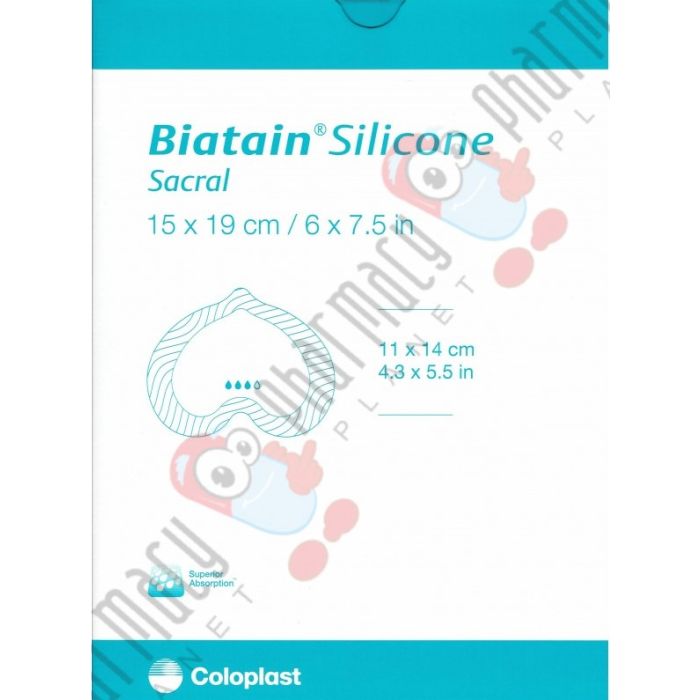
Biatain Silicone is a soft polyurethane foam dressing which has a semi-permeable film and also a soft silicone adhesive. The silicone wound contact layer helps to provide a secure fit, which keeps the dressing in place whilst ensuring there is minimal pain when removing.

Consult
Select
Checkout
01
Select

the items you wish
to order

02
Order reviewed

by our qualified
prescriber

03
Delivered

to your door step

Your Selection

Please use the options provided to make your final selection.
prodName
BIATAIN SILICONE
£35.99
Total
Consult
Select
Checkout
Please make a selection

Please note that whilst you are able to request the medicine strength and size required,
we will only be able to send on approval from our in house pharmacist.

Starts at £35.99
Price Comparison

Select your preferred options and see the best price

PackPrice (£)
-15cm x 19cm543.49
-25cm x 25cm559.99
-18cm x 18cm559.99
-14cm x 19.5cm 545.99
-10cm x 30cm545.99
-10cm x 20cm535.99
-15cm x 15cm1055.49

It looks like you missed filling in questions from the last consultation.Click Here to submit your response.
  • No hidden fees

  • Secure checkout

  • UK Regulated online pharmacy

  • Trusted by over 100,000+ customers

Biatain Silicone | Soft Silicone Foam Dressing for Wound Exudate Management

Choosing a self adhesive foam dressing involves weighing up how well it absorbs wound exudate, how consistently it stays in place, and what happens to the surrounding skin when it is removed. Biatain Silicone is a foam wound dressing from Coloplast that uses a soft silicone layer at the border rather than a conventional pressure-sensitive adhesive. This silicone contact layer holds the dressing against the skin during wear and separates cleanly at removal without the pulling and tearing associated with acrylic-based borders. Available in seven sizes. No active pharmaceutical ingredients. No prescription required.

What Is Biatain Silicone?

Biatain Silicone is a Class IIb regulated medical device from Coloplast. The dressing has four layers: a wound-facing contact surface that does not stick to moist tissue, an absorbent foam layer that draws in and holds wound fluid, a breathable outer film, and a silicone-coated adhesive border. The silicone border is what sets this dressing apart from conventional adhesive foam formats in the Biatain range.

Silicone holds to skin differently from acrylic adhesive. Acrylic adhesives form chemical bonds with the skin surface, which generate shear forces when the dressing is lifted. Silicone instead makes close physical contact with skin through low-energy surface attraction. The bond is sufficient to keep the dressing in place during daily activity but separates without the same degree of force at removal. This is clinically meaningful for patients whose skin around the wound is thin, fragile, or has already been damaged by repeated adhesive use.

Biatain Silicone carries no active ingredients. There is no silver, no ibuprofen, and no antimicrobial component. It addresses exudate volume and skin protection at the wound margins and is appropriate for wounds that are not infected. Seven sizes are stocked, ranging from a compact 15cm x 15cm square through to rectangular formats of varying proportions and up to the large 25cm x 25cm.

Biatain Silicone has no antimicrobial action. It should not be used on wounds that show signs of clinical infection. If redness is spreading from the wound, the wound smells offensive, or healing has stopped unexpectedly, seek clinical assessment. Biatain Silicone Ag is the silver version of this dressing for infected or at risk wounds.

How Biatain Silicone Works

The Silicone Border Layer

The outer border of the dressing is coated with a medical grade soft silicone. When the border is pressed against dry skin, the silicone flows slightly into the surface contours of the skin, creating a broad area of gentle contact. This contact holds the dressing in position throughout the wear period. Because the bond is physical rather than chemical, lifting the dressing at removal does not generate the same concentrated skin stress that acrylic adhesive does when it is peeled back. The silicone also allows the dressing to be lifted and repositioned before being pressed down finally, which is useful when precise placement over a wound is needed.

Foam Absorption Layer

Beneath the outer film sits the polyurethane foam core. When wound exudate passes through the wound contact surface, the foam draws it upward and holds it within its structure. Retaining fluid inside the foam body keeps the wound surface moist without allowing exudate to pool, which would soften and weaken the surrounding skin. The foam also provides a degree of physical cushioning between the wound bed and any external pressure.

Wound Contact Surface

The inner face of the dressing that rests directly on the wound does not bond to moist tissue. This matters at each dressing change because it means the dressing can be lifted without disrupting the healing tissue underneath. The layer allows wound fluid to move through it and into the foam while remaining in place between changes.

Breathable Outer Film

The film on the outer surface of the dressing allows water vapour produced by the foam to escape, which maintains the foam's capacity to absorb more fluid as the wear period continues. The film does not allow liquid water to pass inward, so the dressing can be worn during showering without water reaching the wound.

Applying Biatain Silicone

Preparation

  • Wash hands thoroughly before opening the dressing packaging.
  • Clean the wound and dry the skin surrounding it before applying.
  • The silicone border requires contact with dry, intact skin to hold correctly.

Placing the Dressing

  • Select the size whose foam pad will cover the wound bed completely with margin to spare.
  • Available sizes: 10cm x 20cm, 10cm x 30cm, 14cm x 19.5cm, 15cm x 15cm, 15cm x 19cm, 18cm x 18cm, and 25cm x 25cm.
  • Centre the foam pad over the wound and press the silicone border onto the surrounding skin.
  • If the position is not right, the border can be lifted and repositioned without the dressing losing its ability to hold.
  • No secondary dressing is needed to fix the dressing in place.

Changing and Removing

  • Change the dressing when fluid has reached the edges of the foam pad, when the border has lifted, or when a clinician advises a change is due.
  • To remove, lift a corner of the border and peel it back in line with the skin rather than pulling upward.
  • If any section feels resistant, dampening the border with water or saline first will help it release.
  • Check the wound and the skin beneath the border at every change.
  • The outer film on Biatain Silicone keeps liquid water out, so the dressing can remain in place during a shower. It should not be submerged for extended periods. After washing, pat the dressing dry and check that the border is still adhering properly. Replace the dressing if any section of the border has lifted away from the skin.

Available Sizes

Biatain Silicone 15cm x 15cm

A square format that suits a wide range of moderate-sized wounds on the trunk, upper limbs, and lower limbs. A practical general-purpose size for community wound care and home management.

Biatain Silicone 18cm x 18cm

A larger square suited to wounds whose dimensions extend beyond what a 15cm x 15cm pad can cover with adequate margin on all sides.

Biatain Silicone 25cm x 25cm

The largest format in the Biatain Silicone range. Suited to extensive wound areas that require broad foam coverage with a silicone border, including large pressure wounds managed in clinical settings.

Biatain Silicone 10cm x 20cm

A narrow rectangle suited to lower limb wounds and other sites where the wound runs longer than it does wide, giving better alignment than a square of similar area.

Biatain Silicone 10cm x 30cm

A more elongated version of the narrow rectangle, covering lower limb wound sites with a longer wound course where a 10cm x 20cm pad would not reach the full wound length.

Biatain Silicone 15cm x 19cm

A rectangular format offering a slightly wider and shorter proportion than the 10cm x 20cm. Suited to wounds where this specific shape provides better wound bed coverage and border placement than a square or a narrower rectangle.

Biatain Silicone 14cm x 19.5cm

A format with these particular dimensions suited to specific wound sites and anatomical areas where this proportioned shape gives better coverage than standard square or rectangular options. Refer to the product instructions for the intended wound type.

In all cases, select the size where the foam pad covers the wound in full and the border rests on unbroken skin. Avoid sizes where the border would overlap onto the wound surface.

Cautions and Adverse Effects

When Not to Use Biatain Silicone

  • Known sensitivity to silicone, polyurethane, or any other component in the dressing.
  • Clinically infected wounds — the dressing provides no antimicrobial activity.
  • Dry wounds or wounds with very little exudate, where an absorbent foam dressing is not clinically indicated.

Precautions During Use

  • Do not reuse the dressing. Each dressing is intended for single use only.
  • Assess the skin beneath the border at each dressing change. Even silicone borders can cause irritation on very compromised periwound skin.
  • If signs of wound infection develop during use, change to an antimicrobial dressing and seek clinical advice.
  • Remove the dressing before undergoing MRI.

Possible Adverse Effects

  • Mild skin irritation at the border, particularly on already compromised skin.
  • Wound desiccation if the wound becomes less exuding over time and an absorbent dressing is no longer appropriate.

Suitability and Patient Selection

Wounds and Patients Where Biatain Silicone Is Appropriate

  • Moderately to heavily exuding wounds that are clean and free from infection, where reliable self adhesive foam coverage is the clinical priority
  • Patients with periwound skin that is fragile, thin, or has been damaged by previous dressing use, where reducing the mechanical stress of border removal is clinically important
  • Wounds requiring larger or differently proportioned coverage than standard square adhesive foam formats provide
  • Use in adults and in children where clinically directed and supervised

How Biatain Silicone Sits Within the Biatain Range

Within the Coloplast Biatain range, Biatain Silicone shares its silicone border technology with Biatain Silicone Adhesive Dressing and Biatain Silicone Ag. Biatain Silicone Adhesive Dressing offers a different set of sizes. Biatain Silicone Ag carries ionic silver for infected wounds. The non-silicone adhesive foam formats, Biatain Adhesive and Biatain Adhesive Foam, use conventional acrylic adhesive. Choose between them based on the wound dimensions required and the condition of the periwound skin.

Purchasing Biatain Silicone

Biatain Silicone is a regulated medical device. A prescription is not required to purchase it. All seven sizes are stocked by Pharmacy Planet and can be ordered directly.

Our pharmacists are available to discuss which size is most appropriate for a specific wound and whether Biatain Silicone or another format in the Biatain range is the right clinical choice.

Wounds that are not improving as expected, have become infected, or are causing significant concern should be assessed by a tissue viability nurse, district nurse, or GP. Purchasing a dressing is not a substitute for clinical wound assessment when one is needed.

Storage

  • Keep in a cool, dry location away from direct light.
  • Store below 25°C.
  • Leave in the original packaging until immediately before use.
  • Do not use if the packaging has been opened, torn, or damaged.
  • Check the expiry date before every use.
  • Apply as soon as the packaging is opened.
  • Store out of reach of children.
  • Dispose of used dressings as clinical waste.

Why Choose Pharmacy Planet?

Pharmacy Planet is a GPhC registered online pharmacy. All seven sizes of Biatain Silicone are stocked as genuine Coloplast products sourced through regulated UK supply chains.

Our pharmacists can advise on size selection across the Biatain Silicone range, on the choice between silicone-bordered and standard adhesive foam formats, and on when a wound warrants clinical assessment rather than a simple dressing purchase.

References

  1. Coloplast Ltd. Biatain Silicone — Instructions for Use. Coloplast. https://www.coloplast.co.uk. Accessed May 2026.
  2. National Institute for Health and Care Excellence. Wound care products: selection and prescribing. https://www.nice.org.uk. Accessed May 2026.
  3. Wounds UK. Principles of wound assessment and management. https://www.wounds-uk.com. Accessed May 2026.
  4. NHS. Pressure ulcers: overview of management. https://www.nhs.uk/conditions/pressure-sores. Accessed May 2026.
BIATAIN SILICONE

Choosing a self adhesive foam dressing involves weighing up how well it absorbs wound exudate, how consistently it stays in place, and what happens to the surrounding skin when it is removed. Biatain Silicone is a foam wound dressing from Coloplast that uses a soft silicone layer at the border rather than a conventional pressure-sensitive adhesive. This silicone contact layer holds the dressing against the skin during wear and separates cleanly at removal without the pulling and tearing associated with acrylic-based borders. Available in seven sizes. No active pharmaceutical ingredients. No prescription required.

Biatain Silicone is a Class IIb regulated medical device from Coloplast. The dressing has four layers: a wound-facing contact surface that does not stick to moist tissue, an absorbent foam layer that draws in and holds wound fluid, a breathable outer film, and a silicone-coated adhesive border. The silicone border is what sets this dressing apart from conventional adhesive foam formats in the Biatain range.

Silicone holds to skin differently from acrylic adhesive. Acrylic adhesives form chemical bonds with the skin surface, which generate shear forces when the dressing is lifted. Silicone instead makes close physical contact with skin through low-energy surface attraction. The bond is sufficient to keep the dressing in place during daily activity but separates without the same degree of force at removal. This is clinically meaningful for patients whose skin around the wound is thin, fragile, or has already been damaged by repeated adhesive use.

Biatain Silicone carries no active ingredients. There is no silver, no ibuprofen, and no antimicrobial component. It addresses exudate volume and skin protection at the wound margins and is appropriate for wounds that are not infected. Seven sizes are stocked, ranging from a compact 15cm x 15cm square through to rectangular formats of varying proportions and up to the large 25cm x 25cm.

Biatain Silicone has no antimicrobial action. It should not be used on wounds that show signs of clinical infection. If redness is spreading from the wound, the wound smells offensive, or healing has stopped unexpectedly, seek clinical assessment. Biatain Silicone Ag is the silver version of this dressing for infected or at risk wounds.

The Silicone Border Layer

The outer border of the dressing is coated with a medical grade soft silicone. When the border is pressed against dry skin, the silicone flows slightly into the surface contours of the skin, creating a broad area of gentle contact. This contact holds the dressing in position throughout the wear period. Because the bond is physical rather than chemical, lifting the dressing at removal does not generate the same concentrated skin stress that acrylic adhesive does when it is peeled back. The silicone also allows the dressing to be lifted and repositioned before being pressed down finally, which is useful when precise placement over a wound is needed.

Foam Absorption Layer

Beneath the outer film sits the polyurethane foam core. When wound exudate passes through the wound contact surface, the foam draws it upward and holds it within its structure. Retaining fluid inside the foam body keeps the wound surface moist without allowing exudate to pool, which would soften and weaken the surrounding skin. The foam also provides a degree of physical cushioning between the wound bed and any external pressure.

Wound Contact Surface

The inner face of the dressing that rests directly on the wound does not bond to moist tissue. This matters at each dressing change because it means the dressing can be lifted without disrupting the healing tissue underneath. The layer allows wound fluid to move through it and into the foam while remaining in place between changes.

Breathable Outer Film

The film on the outer surface of the dressing allows water vapour produced by the foam to escape, which maintains the foam's capacity to absorb more fluid as the wear period continues. The film does not allow liquid water to pass inward, so the dressing can be worn during showering without water reaching the wound.

Preparation

  • Wash hands thoroughly before opening the dressing packaging.
  • Clean the wound and dry the skin surrounding it before applying.
  • The silicone border requires contact with dry, intact skin to hold correctly.

Placing the Dressing

  • Select the size whose foam pad will cover the wound bed completely with margin to spare.
  • Available sizes: 10cm x 20cm, 10cm x 30cm, 14cm x 19.5cm, 15cm x 15cm, 15cm x 19cm, 18cm x 18cm, and 25cm x 25cm.
  • Centre the foam pad over the wound and press the silicone border onto the surrounding skin.
  • If the position is not right, the border can be lifted and repositioned without the dressing losing its ability to hold.
  • No secondary dressing is needed to fix the dressing in place.

Changing and Removing

  • Change the dressing when fluid has reached the edges of the foam pad, when the border has lifted, or when a clinician advises a change is due.
  • To remove, lift a corner of the border and peel it back in line with the skin rather than pulling upward.
  • If any section feels resistant, dampening the border with water or saline first will help it release.
  • Check the wound and the skin beneath the border at every change.
  • The outer film on Biatain Silicone keeps liquid water out, so the dressing can remain in place during a shower. It should not be submerged for extended periods. After washing, pat the dressing dry and check that the border is still adhering properly. Replace the dressing if any section of the border has lifted away from the skin.

Biatain Silicone 15cm x 15cm

A square format that suits a wide range of moderate-sized wounds on the trunk, upper limbs, and lower limbs. A practical general-purpose size for community wound care and home management.

Biatain Silicone 18cm x 18cm

A larger square suited to wounds whose dimensions extend beyond what a 15cm x 15cm pad can cover with adequate margin on all sides.

Biatain Silicone 25cm x 25cm

The largest format in the Biatain Silicone range. Suited to extensive wound areas that require broad foam coverage with a silicone border, including large pressure wounds managed in clinical settings.

Biatain Silicone 10cm x 20cm

A narrow rectangle suited to lower limb wounds and other sites where the wound runs longer than it does wide, giving better alignment than a square of similar area.

Biatain Silicone 10cm x 30cm

A more elongated version of the narrow rectangle, covering lower limb wound sites with a longer wound course where a 10cm x 20cm pad would not reach the full wound length.

Biatain Silicone 15cm x 19cm

A rectangular format offering a slightly wider and shorter proportion than the 10cm x 20cm. Suited to wounds where this specific shape provides better wound bed coverage and border placement than a square or a narrower rectangle.

Biatain Silicone 14cm x 19.5cm

A format with these particular dimensions suited to specific wound sites and anatomical areas where this proportioned shape gives better coverage than standard square or rectangular options. Refer to the product instructions for the intended wound type.

In all cases, select the size where the foam pad covers the wound in full and the border rests on unbroken skin. Avoid sizes where the border would overlap onto the wound surface.

When Not to Use Biatain Silicone

  • Known sensitivity to silicone, polyurethane, or any other component in the dressing.
  • Clinically infected wounds — the dressing provides no antimicrobial activity.
  • Dry wounds or wounds with very little exudate, where an absorbent foam dressing is not clinically indicated.

Precautions During Use

  • Do not reuse the dressing. Each dressing is intended for single use only.
  • Assess the skin beneath the border at each dressing change. Even silicone borders can cause irritation on very compromised periwound skin.
  • If signs of wound infection develop during use, change to an antimicrobial dressing and seek clinical advice.
  • Remove the dressing before undergoing MRI.

Possible Adverse Effects

  • Mild skin irritation at the border, particularly on already compromised skin.
  • Wound desiccation if the wound becomes less exuding over time and an absorbent dressing is no longer appropriate.

Wounds and Patients Where Biatain Silicone Is Appropriate

  • Moderately to heavily exuding wounds that are clean and free from infection, where reliable self adhesive foam coverage is the clinical priority
  • Patients with periwound skin that is fragile, thin, or has been damaged by previous dressing use, where reducing the mechanical stress of border removal is clinically important
  • Wounds requiring larger or differently proportioned coverage than standard square adhesive foam formats provide
  • Use in adults and in children where clinically directed and supervised

Within the Coloplast Biatain range, Biatain Silicone shares its silicone border technology with Biatain Silicone Adhesive Dressing and Biatain Silicone Ag. Biatain Silicone Adhesive Dressing offers a different set of sizes. Biatain Silicone Ag carries ionic silver for infected wounds. The non-silicone adhesive foam formats, Biatain Adhesive and Biatain Adhesive Foam, use conventional acrylic adhesive. Choose between them based on the wound dimensions required and the condition of the periwound skin.

Biatain Silicone is a regulated medical device. A prescription is not required to purchase it. All seven sizes are stocked by Pharmacy Planet and can be ordered directly.

Our pharmacists are available to discuss which size is most appropriate for a specific wound and whether Biatain Silicone or another format in the Biatain range is the right clinical choice.

Wounds that are not improving as expected, have become infected, or are causing significant concern should be assessed by a tissue viability nurse, district nurse, or GP. Purchasing a dressing is not a substitute for clinical wound assessment when one is needed.

  • Keep in a cool, dry location away from direct light.
  • Store below 25°C.
  • Leave in the original packaging until immediately before use.
  • Do not use if the packaging has been opened, torn, or damaged.
  • Check the expiry date before every use.
  • Apply as soon as the packaging is opened.
  • Store out of reach of children.
  • Dispose of used dressings as clinical waste.

Pharmacy Planet is a GPhC registered online pharmacy. All seven sizes of Biatain Silicone are stocked as genuine Coloplast products sourced through regulated UK supply chains.

Our pharmacists can advise on size selection across the Biatain Silicone range, on the choice between silicone-bordered and standard adhesive foam formats, and on when a wound warrants clinical assessment rather than a simple dressing purchase.

References

  1. Coloplast Ltd. Biatain Silicone — Instructions for Use. Coloplast. https://www.coloplast.co.uk. Accessed May 2026.
  2. National Institute for Health and Care Excellence. Wound care products: selection and prescribing. https://www.nice.org.uk. Accessed May 2026.
  3. Wounds UK. Principles of wound assessment and management. https://www.wounds-uk.com. Accessed May 2026.
  4. NHS. Pressure ulcers: overview of management. https://www.nhs.uk/conditions/pressure-sores. Accessed May 2026.
Frequently Asked Questions

Biatain Silicone is designed for moderately to heavily exuding wounds that are not infected. The foam core absorbs and retains wound fluid while the soft silicone border holds the dressing against the skin. It suits wounds on patients with fragile or damaged periwound skin because the silicone separates more cleanly at removal than conventional adhesive borders. It is not appropriate for dry wounds, infected wounds, or situations where an antimicrobial dressing is indicated. Seven sizes cover wound dimensions from mid-size squares through to a large 25cm x 25cm format.

Standard acrylic adhesive borders form chemical bonds with the skin that generate shear and peel forces when the dressing is removed. On healthy intact skin this is generally well tolerated. On skin that is thin, fragile, oedematous, or already damaged by repeated dressing use, those same forces can strip the surface layers and cause new wounds at the border site. Silicone adhesive holds through physical surface contact rather than a chemical bond, which means the force needed to remove the dressing is lower. For patients where periwound skin damage at dressing changes is a clinical concern, silicone borders reduce that risk.

Yes. The silicone border can be lifted from the skin and repositioned before it is finally pressed down, without the dressing losing its ability to hold. This is useful when precision placement over a wound matters or when first contact did not align the foam pad correctly over the wound. Once you are satisfied with the position, press the border firmly onto dry skin around the full perimeter to secure it.

The foam pad should cover the wound completely with a clear margin on all sides, and the adhesive border should rest entirely on unbroken skin. Biatain Silicone is available in 15cm x 15cm, 18cm x 18cm, 25cm x 25cm, 10cm x 20cm, 10cm x 30cm, 15cm x 19cm, and 14cm x 19.5cm. The rectangular formats suit elongated wounds, particularly on the lower limb. The 25cm x 25cm covers large wound areas. If you are uncertain which size is right for a specific wound, our pharmacists can advise, and a tissue viability nurse or district nurse can provide a formal wound assessment.

No. Biatain Silicone contains no antimicrobial ingredient and will not treat an infected wound. If a wound shows any of the following, it should be assessed by a healthcare professional before applying a dressing: spreading redness in the skin around the wound, increased warmth, swelling, an offensive smell, increasing pain, or a wound that was healing but has recently worsened. For infected or at risk wounds where a silicone-bordered foam is still the right format, Biatain Silicone Ag contains ionic silver alongside the silicone border and foam construction.

The wear time depends on how much fluid the wound is producing. A heavily exuding wound will saturate the foam faster than a moderately exuding one. As a general guide, change the dressing when fluid has spread close to the edge of the foam pad, when the border is lifting away from the skin, or when clinical guidance indicates a change is due. Do not leave the dressing in place purely because the maximum wear time has not been reached if the wound or skin condition has changed.

They are related products in the same Coloplast silicone-bordered foam family and share the same silicone adhesive border mechanism. The difference is the range of sizes available. Biatain Silicone Adhesive Dressing offers a set of sizes focused around compact and medium square formats. Biatain Silicone offers a different set of seven sizes including larger squares and a broader selection of rectangular formats. If the wound dimensions are better matched by sizes in one range than the other, that should guide the choice.

No. Biatain Silicone is a medical device, not a medicine. It does not require a prescription and can be purchased directly from Pharmacy Planet in any of the seven available sizes. If there is any uncertainty about whether this dressing is the right choice for a wound, our pharmacists can advise. Wounds that are complex, infected, or not responding to management should be assessed by a healthcare professional rather than managed by dressing choice alone.

How it works
Start Consultation
Complete our online
clinical consultation

Answer a few questions on your health and your fitness goals.

Setup Coaching
Clinical
assessment

Our clinicians will review your clinical questionnaire to make sure treatment is right for you.

Ongoing Support
Welcome
aboard!

Once approved, you will access our wealth of experience and resources curated by our team and begin your clinical journey.

Start your journey with us

What our patients are saying

Need Help?

question mark
Do you have a question about weight loss treatment?

Start your weight loss journey heading in the right direction. Our team are here to help. Whether you’re unsure about which medicine is right for you or need help navigating the world of weight loss drugs, our team are on hand to help you make the right decision. We can put you in touch with one of our experienced weight loss clinicians so you can be sure you’re making the best decision with the most accurate information.

To get in touch, contact our Customer Service team on 0800 978 8956 or email headoffice@pharmacyplanet.com.

Meet the team
Pharmacist Image

Review By

GURDEV SEHMI

Last Updated On : Mar 13 2026

BSc Pharm, MRPharmS, Independent Prescriber, Superintendent Pharmacist, Clinical Lead

GPhC Number: 2050925

Pharmacist Image

Authored By

GURDEV SEHMI

Last Reviewed On : Mar 23 2026

BSc Pharm, MRPharmS, Independent Prescriber, Superintendent Pharmacist, Clinical Lead

GPhC Number: 2050925