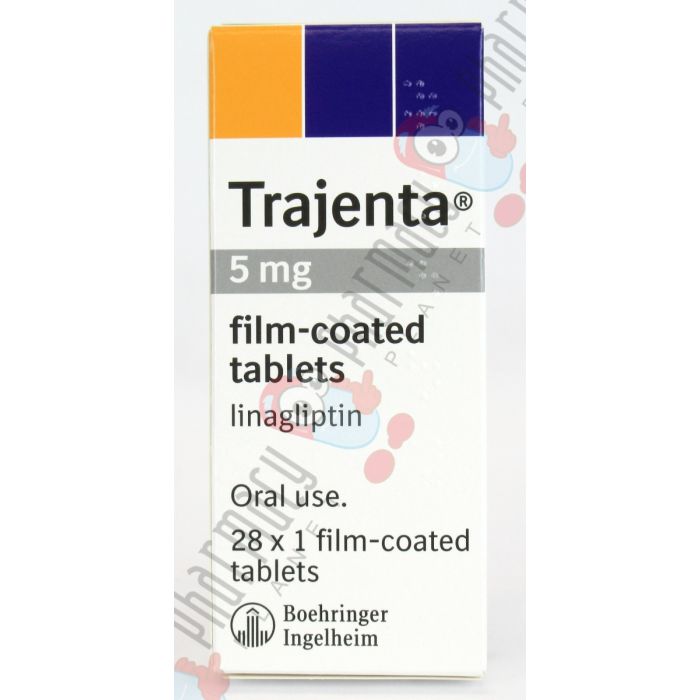
Trajenta
Trajenta belongs to the class of drugs known as DPP-4 inhibitors, which are used to treat type 2 diabetes. Trajenta works by increasing the amount of incretin produced by the intestine. Incretin is a natural hormone that increases insulin levels when blood sugar levels are high - after a meal for example - and reduces the amount of sugar produced by the body. Trajenta is usually taken together with other medications to control the blood sugar levels of adults with type 2 diabetes. It is designed to be used as part of a holistic diabetes management plan that also includes a diet and exercise regimen.
the items you wish
to order
by our qualified
prescriber
to your door step
Please use the options provided to make your final selection.

Select your preferred options and see the best price
| Pack | Price (£) | ||
|---|---|---|---|
| - | 5mg | 28 Tablets | 50.00 |
| - | 5mg | 56 Tablets | 90.00 |
| - | 5mg | 84 Tablets | 130.00 |
It looks like you missed filling in questions from the last consultation.Click Here to submit your response.
Trajenta is an oral medicine used to help control blood sugar levels in patients with type 2 diabetes. It belongs to a class of medicines known as DPP-4 inhibitors, which work to enhance the body’s natural mechanisms to control glucose levels after meals. Trajenta works by increasing the level of incretin hormones, which signal the body to start producing insulin when blood sugar levels rise, typically after eating. Incretins also help lower the amount of sugar produced by the liver, which further improves blood sugar control.
What is Trajenta?
Trajenta contains the active substance linagliptin which belongs to a group of medicines known as "oral antidiabetics". Oral antidiabetics are used to treat high blood sugar levels. They work by helping the body lower the level of sugar in your blood.
How does it work?
Linagliptin is an inhibitor of the enzyme DPP-4 (dipeptidyl-peptidase 4, EC 3.4.14.5), an enzyme that is involved in the inactivation of the incretin hormones GLP-1 (glucagon-like peptide 1) and GIP (insulinotropic dependent polypeptide glucose). These hormones are rapidly broken down by the enzyme DPP-4. Both incretin hormones are involved in the physiological regulation of glucose homeostasis. Incretins secrete at a low basal level throughout the day and their levels increase immediately after food intake. GLP-1 and GIP increase biosynthesis and insulin secretion by pancreatic beta cells in the presence of normal and elevated blood glucose levels. In addition, GLP-1 also reduces glucagon secretion by pancreatic alpha cells, resulting in reduced hepatic glucose production. Linagliptin effectively binds to DPP-4 reversibly and thus leads to a sustained increase and a prolongation of levels of active incretin. Linagliptin increases insulin secretion and decreases glucagon secretion in a glucose-dependent manner, leading to an overall improvement in glucose homeostasis. Linagliptin selectively binds to DPP-4 and exhibits an in vitro selectivity of> 10,000-fold against DPP-8 or DPP-9 activity.
What are the benefits of taking it?
Trajenta is used to treat "type 2 diabetes" in adults if the disease cannot be adequately controlled with oral anti-diabetic medicine (metformin or sulfonylureas) or diet and exercise alone. Trajenta can be used together with other antidiabetic medicines, eg eg, metformin, sulfonylureas (eg glimepiride, glipizide), empagliflozin, or insulin.
It is important that you follow the diet and exercise advice given by your doctor or nurse.
How do I use it and its dosage?
Always follow exactly the instructions of this medicine given by your doctor. If in doubt, consult your doctor or pharmacist again.
The recommended dose of Trajenta is one 5 mg tablet once a day.
You can take Trajenta with or without food.
The doctor may prescribe Trajenta together with another oral antidiabetic medicine. Remember to take all medications as directed by your doctor to get the best results for your health.
Side effects & precautions
Like all medicines, this medicine can cause side effects, although not everybody gets them.
Some symptoms need immediate medical attention
You should stop taking Trajenta and see your doctor immediately if you experience the following symptoms of low blood sugar: tremor, sweating, anxiety, blurred vision, tickling of the lips, paleness, mood swings, or confusion (hypoglycemia). Hypoglycemia (frequency: very common, may affect more than 1 in 10 people) is an identified adverse effect when Trajenta is taken together with metformin and a sulfonylurea.
Some patients have had allergic reactions (hypersensitivity; infrequent frequency, may affect up to 1 in 100 people) while taking Trajenta alone or in combination with other medicines for the treatment of diabetes, which can be serious, including wheezing and shortness of breath (Bronchial hyperresponsiveness; frequency not known, the frequency cannot be estimated from the available data). Some patients had a rash (skin reaction; uncommon frequency), hives (hives; rare frequency, may affect up to 1 in 1,000 people) and swelling of the face, lips, tongue, and throat that can cause difficulty breathing or swallowing (angioedema; rare frequency). If you experience any of the signs of illness mentioned above, stop taking Trajenta and see your doctor quickly. Your doctor may prescribe a medicine to treat your allergic reaction and a different medicine for your diabetes.
Some patients have experienced inflammation of the pancreas (pancreatitis; rare frequency, may affect up to 1 in 1,000 people) while taking Trajenta alone or in combination with other medications to treat diabetes.
Stop taking Trajenta and see a doctor immediately if you notice any of the following serious side effects:
Persistent and severe pain in the abdomen (stomach area), which can be reflected in the back, as well as nausea and vomiting, as this could be an indication of an inflamed pancreas (pancreatitis).
Some patients have experienced the following side effects while taking Trajenta alone or in combination with other medicines for the treatment of diabetes:
- Common: elevated levels of the enzyme lipase in the blood.
- Uncommon: inflammation of the nose or throat (nasopharyngitis), cough, constipation (in combination with insulin), high levels of the enzyme amylase in the blood.
- Rare: blisters on the skin (bullous pemphigoid).
Warnings and precautions
Talk to your doctor, pharmacist, or nurse before taking Trajenta if you:
- you have type 1 diabetes (your body does not make insulin) or diabetic ketoacidosis (a complication of diabetes with high blood sugar levels, rapid weight loss, nausea, or vomiting). Trajenta should not be used to treat these medical conditions.
- If you are taking an antidiabetic medicine known as a "sulfonylurea" (eg glimepiride, glipizide), your doctor may want to reduce your sulfonylurea dose when you take it together with Trajenta to prevent your blood sugar levels from dropping too low.
- you have had allergic reactions to any other medicines you take to control the amount of sugar in your blood.
- have or have had a disease of the pancreas.
Buying Doxazosin online.
You can buy Trajenta Diabetes Tablets online through one of the UK’s leading online pharmacies, Pharmacy Planet. It's easy and convenient. You will need to fill out a short assessment and the item will be delivered directly to your door. If you want to buy this Diabetes Treatment medication online, use Pharmacy Planet, a UK pharmacy you can trust.
Trajenta contains the active substance linagliptin which belongs to a group of medicines known as "oral antidiabetics". Oral antidiabetics are used to treat high blood sugar levels. They work by helping the body lower the level of sugar in your blood.
Linagliptin is an inhibitor of the enzyme DPP-4 (dipeptidyl-peptidase 4, EC 3.4.14.5), an enzyme that is involved in the inactivation of the incretin hormones GLP-1 (glucagon-like peptide 1) and GIP (insulinotropic dependent polypeptide glucose). These hormones are rapidly broken down by the enzyme DPP-4. Both incretin hormones are involved in the physiological regulation of glucose homeostasis. Incretins secrete at a low basal level throughout the day and their levels increase immediately after food intake. GLP-1 and GIP increase biosynthesis and insulin secretion by pancreatic beta cells in the presence of normal and elevated blood glucose levels. In addition, GLP-1 also reduces glucagon secretion by pancreatic alpha cells, resulting in reduced hepatic glucose production. Linagliptin effectively binds to DPP-4 reversibly and thus leads to a sustained increase and a prolongation of levels of active incretin. Linagliptin increases insulin secretion and decreases glucagon secretion in a glucose-dependent manner, leading to an overall improvement in glucose homeostasis. Linagliptin selectively binds to DPP-4 and exhibits an in vitro selectivity of> 10,000-fold against DPP-8 or DPP-9 activity.
Trajenta is used to treat "type 2 diabetes" in adults if the disease cannot be adequately controlled with oral anti-diabetic medicine (metformin or sulfonylureas) or diet and exercise alone. Trajenta can be used together with other antidiabetic medicines, eg eg, metformin, sulfonylureas (eg glimepiride, glipizide), empagliflozin, or insulin.
It is important that you follow the diet and exercise advice given by your doctor or nurse.
Always follow exactly the instructions of this medicine given by your doctor. If in doubt, consult your doctor or pharmacist again.
The recommended dose of Trajenta is one 5 mg tablet once a day.
You can take Trajenta with or without food.
The doctor may prescribe Trajenta together with another oral antidiabetic medicine. Remember to take all medications as directed by your doctor to get the best results for your health.
Like all medicines, this medicine can cause side effects, although not everybody gets them.
Some symptoms need immediate medical attention
You should stop taking Trajenta and see your doctor immediately if you experience the following symptoms of low blood sugar: tremor, sweating, anxiety, blurred vision, tickling of the lips, paleness, mood swings, or confusion (hypoglycemia). Hypoglycemia (frequency: very common, may affect more than 1 in 10 people) is an identified adverse effect when Trajenta is taken together with metformin and a sulfonylurea.
Some patients have had allergic reactions (hypersensitivity; infrequent frequency, may affect up to 1 in 100 people) while taking Trajenta alone or in combination with other medicines for the treatment of diabetes, which can be serious, including wheezing and shortness of breath (Bronchial hyperresponsiveness; frequency not known, the frequency cannot be estimated from the available data). Some patients had a rash (skin reaction; uncommon frequency), hives (hives; rare frequency, may affect up to 1 in 1,000 people) and swelling of the face, lips, tongue, and throat that can cause difficulty breathing or swallowing (angioedema; rare frequency). If you experience any of the signs of illness mentioned above, stop taking Trajenta and see your doctor quickly. Your doctor may prescribe a medicine to treat your allergic reaction and a different medicine for your diabetes.
Some patients have experienced inflammation of the pancreas (pancreatitis; rare frequency, may affect up to 1 in 1,000 people) while taking Trajenta alone or in combination with other medications to treat diabetes.
Stop taking Trajenta and see a doctor immediately if you notice any of the following serious side effects:
Persistent and severe pain in the abdomen (stomach area), which can be reflected in the back, as well as nausea and vomiting, as this could be an indication of an inflamed pancreas (pancreatitis).
Some patients have experienced the following side effects while taking Trajenta alone or in combination with other medicines for the treatment of diabetes:
- Common: elevated levels of the enzyme lipase in the blood.
- Uncommon: inflammation of the nose or throat (nasopharyngitis), cough, constipation (in combination with insulin), high levels of the enzyme amylase in the blood.
- Rare: blisters on the skin (bullous pemphigoid).
Warnings and precautions
Talk to your doctor, pharmacist, or nurse before taking Trajenta if you:
- you have type 1 diabetes (your body does not make insulin) or diabetic ketoacidosis (a complication of diabetes with high blood sugar levels, rapid weight loss, nausea, or vomiting). Trajenta should not be used to treat these medical conditions.
- If you are taking an antidiabetic medicine known as a "sulfonylurea" (eg glimepiride, glipizide), your doctor may want to reduce your sulfonylurea dose when you take it together with Trajenta to prevent your blood sugar levels from dropping too low.
- you have had allergic reactions to any other medicines you take to control the amount of sugar in your blood.
- have or have had a disease of the pancreas.

You can buy Trajenta Diabetes Tablets online through one of the UK’s leading online pharmacies, Pharmacy Planet. It's easy and convenient. You will need to fill out a short assessment and the item will be delivered directly to your door. If you want to buy this Diabetes Treatment medication online, use Pharmacy Planet, a UK pharmacy you can trust.
Trajenta helps manage blood sugar levels by enhancing the effects of incretin hormones, which can be found in the body. These incretins stimulate the pancreas to produce insulin after meals, which helps to lower blood sugar levels. It can also reduce the liver’s production of glucose, which can help regulate blood sugar levels.
Yes, Trajenta can be taken with other medicines for type 2 diabetes, such as insulin or Metformin. Taking a combination of medicines can help provide better blood glucose control; however, this depends on the patient and how they respond to their current medication and if they need any kind of medical intervention.
Trajenta is processed through the kidneys, so patients who have severe kidney issues should not use this medication. Any mild to moderate kidney problems can be considered generally safe, but you should consult your healthcare provider and have the appropriate tests before using this medicine.
You can expect to see results from taking Trajenta within a few days to a couple of weeks. However, the full benefits of Trajenta will require consistent use over time. Make sure to monitor your blood sugar levels regularly to assess how well the medicine is working in managing type 2 diabetes.
If you experience side effects from Trajenta, such as gastrointestinal issues, nausea, or diarrhoea, contact your healthcare provider for advice. Rare side effects, such as allergic reactions or joint pain, require immediate attention from a healthcare provider.
Trajenta is not safe for use during pregnancy unless specifically advised by your healthcare provider. If you are pregnant or planning to become pregnant, consult your healthcare professional about suitable diabetes medicines. As for breastfeeding, Trajenta has not been clinically tested enough to support this being safe, so it is best to get in touch with your healthcare provider to discuss alternative options.

clinical consultation
Answer a few questions on your health and your fitness goals.

assessment
Our clinicians will review your clinical questionnaire to make sure treatment is right for you.

aboard!
Once approved, you will access our wealth of experience and resources curated by our team and begin your clinical journey.
Start your journey with us
Need Help?

Start your weight loss journey heading in the right direction. Our team are here to help. Whether you’re unsure about which medicine is right for you or need help navigating the world of weight loss drugs, our team are on hand to help you make the right decision. We can put you in touch with one of our experienced weight loss clinicians so you can be sure you’re making the best decision with the most accurate information.
To get in touch, contact our Customer Service team on 0800 978 8956 or email [email protected].

Authored By
HARMINDER ‘HARMY’ KAUR
BSc(hons) Pharmacy
GPhC Number: 2061107

Reviewed By
GURDEV SEHMI
BSc Pharm, MRPharmS, Independent Prescriber, Superintendent Pharmacist, Clinical Lead
GPhC Number: 2050925