








Facebook Pixel
New Patients – Get 10% Off Your First Consultation with Code: NEW10 at Checkout

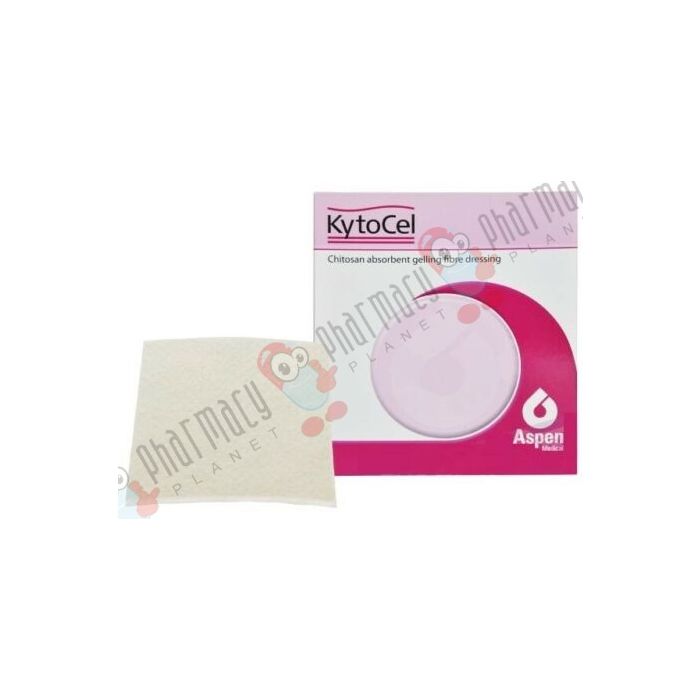
Kytocel is a soft, sterile absorbent gelling fibre dressing which is made from chitosan. This transforms into a soft gel on absorption of wound exudate. It is able to aid autolytic debridement and is able to be removed in one piece without damaging newly formed tissue.

Consult
Select
Checkout
01
Select

the items you wish
to order

02
Order reviewed

by our qualified
prescriber

03
Delivered

to your door step

Your Selection

Please use the options provided to make your final selection.
prodName
KYTOCEL
£16.99
Total
Consult
Select
Checkout
Please make a selection

Please note that whilst you are able to request the medicine strength and size required,
we will only be able to send on approval from our in house pharmacist.

Starts at £16.99
Price Comparison

Select your preferred options and see the best price

PackPrice (£)
-5cm x 5cm1016.99
-10cm x 10cm1039.99
-15cm x 15cm1075.49

It looks like you missed filling in questions from the last consultation.Click Here to submit your response.
  • No hidden fees

  • Secure checkout

  • UK Regulated online pharmacy

  • Trusted by over 100,000+ customers

KytoCel | Chitosan Absorbent Gelling Fibre Dressing for Wound Exudate Management

Chitosan is a naturally derived polysaccharide obtained from chitin, a structural material found in crustacean shells. In wound care, chitosan fibres share the gelling fibre dressing format with alginate and hydrofibre products but bring a distinct material with its own absorption characteristics, haemostatic behaviour, and documented antimicrobial properties at the material level. KytoCel is a chitosan absorbent gelling fibre dressing from Aspen Medical Europe. Three sizes. Secondary dressing required. No prescription needed.

What Is KytoCel?

KytoCel is a Class IIb regulated medical device from Aspen Medical Europe. The packaging describes it as a chitosan absorbent gelling fibre dressing. The fibres are formed from chitosan, a polysaccharide derived from chitin by a deacetylation process. Chitin is the structural polymer found in the exoskeletons of crustaceans and in some fungi. Chitosan, produced from chitin, is a long-chain polysaccharide that can be processed into wound care fibres.

KytoCel belongs to the gelling fibre dressing category alongside alginate dressings (such as Kaltostat), hydrofibre dressings (such as AQUACEL), and synthetic gelling fibre dressings (such as DuraFiber). All absorb wound exudate and form a gel at the wound surface. The chitosan fibres in KytoCel absorb exudate and transform into a cohesive gel that maintains wound contact and supports a moist wound environment. The gel formed by chitosan has a different character from alginate gel owing to the different polymer chemistry involved.

Chitosan, as a material class, has documented haemostatic properties and has been shown in published laboratory and clinical research to have antimicrobial activity against a range of wound pathogens. The haemostatic effect is mediated through chitosan's interaction with red blood cells and platelets, supporting clot formation. The antimicrobial properties are a material characteristic of chitosan as a positively charged polymer that interacts with the negatively charged surfaces of bacterial cell membranes. These are properties of the chitosan material described in the published literature rather than specific clinical claims attributed to KytoCel as a product.

KytoCel is a primary wound contact material. It has no adhesive border or outer layer. A secondary dressing must always be applied over KytoCel. Three sizes are available: 5cm x 5cm, 10cm x 10cm, and 15cm x 15cm.

KytoCel requires a secondary dressing to be applied immediately after placement. Without a secondary dressing, KytoCel provides no exudate management beyond the initial contact layer. KytoCel does not replace clinical assessment for infected or worsening wounds. If the wound shows clinical signs of infection, seek clinical assessment. KytoCel has no added antimicrobial agents and should not be used as the sole management for clinically infected wounds.

How KytoCel Works

Gelling Fibre Absorption

KytoCel absorbs wound exudate from the wound surface. As the chitosan fibres take on fluid, they swell and soften from a dry fibrous structure into a cohesive gel mass. This gel conforms to the wound surface and holds absorbed exudate within the gel structure. The gel provides consistent moist wound contact throughout the wear period, supporting the cellular processes associated with moist wound healing.

Haemostatic Properties of Chitosan

Chitosan interacts with erythrocytes and platelets at the wound surface. The positively charged chitosan polymer attracts negatively charged red blood cells, promoting their aggregation. Chitosan also activates platelets, supporting the formation of a provisional fibrin matrix. This haemostatic activity makes chitosan-based gelling fibre dressings appropriate for wound types where some local bleeding accompanies exudate management, including post-procedural wounds and wounds with friable wound beds.

Antimicrobial Material Properties

Chitosan is a cationic polymer - it carries a positive charge at physiological pH levels. Bacterial cell membranes carry a net negative charge. The electrostatic attraction between positively charged chitosan and negatively charged bacterial surfaces has been shown in published research to disrupt bacterial membrane integrity and inhibit bacterial growth. This is an intrinsic material property of chitosan reported in the scientific literature rather than a specific product registration claim. The relevance of this property in the clinical wound environment depends on wound conditions and bacterial bioburden, and should be considered alongside clinical assessment of the wound rather than as a replacement for it.

Cohesive Gel and Wound Interaction

The cohesive nature of the gel formed by KytoCel during the wear period supports removal as a single piece rather than fragmenting. For wounds where the gel may have dried during the wear period, irrigation with sterile saline before removal softens the gel and reduces the risk of mechanical disruption to the wound surface at the time of dressing change.

How to Apply KytoCel

Preparation

  • Wash hands and use gloves.
  • Clean the wound with sterile saline.
  • Prepare the secondary dressing before opening KytoCel.

Application

  • Select the appropriate size: 5cm x 5cm, 10cm x 10cm, or 15cm x 15cm.
  • Apply KytoCel dry directly to the wound surface. Do not pre-wet.
  • Apply the secondary dressing immediately over KytoCel.
  • Label with the date and time.

Removal

  • If KytoCel has absorbed exudate and formed gel, it should separate from the wound without significant resistance.
  • If the dressing appears dry, irrigate with sterile saline before removal.
  • Assess the wound at each change for progress and for any signs of deterioration.

Always apply KytoCel dry to the wound. Pre-wetting activates the gelling process before the dressing is in place and reduces its absorption capacity. Apply the secondary dressing immediately. If KytoCel feels adherent at removal, irrigate rather than pull.

Available Sizes

KytoCel 5cm x 5cm

A small square for compact wound areas, minor post-procedural sites, small exuding wounds, and sites where a 10cm x 10cm sheet would extend significantly beyond the wound margins.

KytoCel 10cm x 10cm

A medium square for moderate-sized wounds across a range of wound types and body sites. Suited to pressure ulcers, venous leg ulcer areas, and other moderate wound dimensions where chitosan gelling fibre is clinically appropriate.

KytoCel 15cm x 15cm

A larger square for more extensive wound areas, where the 10cm x 10cm does not provide adequate wound coverage. For large wound beds under clinical supervision.

All three sizes use the same chitosan gelling fibre material and require a secondary dressing.

Safety Information and Precautions

Do Not Use KytoCel If

  • Known sensitivity or allergy to chitosan, crustaceans, or shellfish. Chitosan is derived from crustacean shells.
  • The wound is dry or minimally exuding. Gelling fibre requires exudate to activate gel formation.

Precautions

  • Apply dry to the wound. Do not wet the dressing before application.
  • Always apply a secondary dressing immediately.
  • Single use only.
  • Irrigate with saline before removal if the dressing has dried against the wound surface.
  • Seek clinical assessment if the wound is not improving or shows signs of infection.
  • Remove before MRI.

Adverse Effects

  • Wound desiccation, if used on a wound producing insufficient exudate to activate the gel.
  • Allergic reaction in patients with crustacean or shellfish allergy. Patients with known shellfish allergy should seek clinical guidance before using chitosan-based wound products.

Suitability

Wounds Where KytoCel Is Appropriate

  • Moderate to heavily exuding clean or at-risk wounds where a gelling fibre wound contact layer is clinically appropriate, and the material properties of chitosan are a relevant consideration
  • Wound sites where both exudate management and haemostatic support are clinically useful alongside each other
  • Adults and children where clinically directed

KytoCel vs Other Gelling Fibre Dressings

KytoCel uses chitosan fibre, a naturally derived polysaccharide from crustacean chitin. It differs from alginate dressings (Kaltostat, ConvaTec), which use seaweed-derived calcium sodium alginate with calcium-mediated haemostasis and ion exchange gel formation. It differs from hydrofibre dressings (AQUACEL, ConvaTec), which use carboxymethylcellulose. It differs from synthetic gelling fibres (DuraFiber, Smith & Nephew), which have no haemostatic activity. KytoCel is the option where the documented haemostatic and antimicrobial material properties of chitosan are the clinical rationale, alongside gelling fibre exudate management.

Purchasing KytoCel

KytoCel is a regulated medical device and does not require a prescription. All three sizes are available from Pharmacy Planet without a clinical consultation.

Our pharmacists can advise on KytoCel and on appropriate secondary dressings for different wound types.

Patients with a known shellfish or crustacean allergy should seek clinical guidance before using KytoCel. For complex wounds, infected wounds, or wounds not progressing as expected, seek assessment from a tissue viability nurse, district nurse, or GP.

Storage

  • Store in a cool, dry place away from direct heat and sunlight.
  • Do not store above 25 degrees C.
  • Keep in original sealed packaging until immediately before use.
  • Do not use if the packaging is damaged.
  • Check expiry date before use.
  • Apply as soon as the packaging is opened.
  • Keep out of reach of children.
  • Dispose of used dressings as clinical waste.

Why Choose Pharmacy Planet?

Pharmacy Planet is a GPhC registered online pharmacy. All three KytoCel sizes are genuine Aspen Medical Europe products stocked through regulated UK supply chains.

Our pharmacists can advise on KytoCel alongside other gelling fibre dressing options and on secondary dressing selection for different wound types.

References

  1. Aspen Medical Europe. KytoCel Dressing — Instructions for Use. Aspen Medical Europe. https://www.aspenmedical.com. Accessed June 2026.
  2. Croisier F, Jerome C. Chitosan-based biomaterials for tissue engineering. European Polymer Journal. 2013;49(4):780-792. Referenced June 2026.
  3. National Institute for Health and Care Excellence. Wound care products: selection and prescribing. https://www.nice.org.uk. Accessed June 2026.
  4. Wounds UK. Best Practice Statement: Wound exudate — effective assessment and management. https://www.wounds-uk.com. Accessed June 2026.
KYTOCEL

Chitosan is a naturally derived polysaccharide obtained from chitin, a structural material found in crustacean shells. In wound care, chitosan fibres share the gelling fibre dressing format with alginate and hydrofibre products but bring a distinct material with its own absorption characteristics, haemostatic behaviour, and documented antimicrobial properties at the material level. KytoCel is a chitosan absorbent gelling fibre dressing from Aspen Medical Europe. Three sizes. Secondary dressing required. No prescription needed.

KytoCel is a Class IIb regulated medical device from Aspen Medical Europe. The packaging describes it as a chitosan absorbent gelling fibre dressing. The fibres are formed from chitosan, a polysaccharide derived from chitin by a deacetylation process. Chitin is the structural polymer found in the exoskeletons of crustaceans and in some fungi. Chitosan, produced from chitin, is a long-chain polysaccharide that can be processed into wound care fibres.

KytoCel belongs to the gelling fibre dressing category alongside alginate dressings (such as Kaltostat), hydrofibre dressings (such as AQUACEL), and synthetic gelling fibre dressings (such as DuraFiber). All absorb wound exudate and form a gel at the wound surface. The chitosan fibres in KytoCel absorb exudate and transform into a cohesive gel that maintains wound contact and supports a moist wound environment. The gel formed by chitosan has a different character from alginate gel owing to the different polymer chemistry involved.

Chitosan, as a material class, has documented haemostatic properties and has been shown in published laboratory and clinical research to have antimicrobial activity against a range of wound pathogens. The haemostatic effect is mediated through chitosan's interaction with red blood cells and platelets, supporting clot formation. The antimicrobial properties are a material characteristic of chitosan as a positively charged polymer that interacts with the negatively charged surfaces of bacterial cell membranes. These are properties of the chitosan material described in the published literature rather than specific clinical claims attributed to KytoCel as a product.

KytoCel is a primary wound contact material. It has no adhesive border or outer layer. A secondary dressing must always be applied over KytoCel. Three sizes are available: 5cm x 5cm, 10cm x 10cm, and 15cm x 15cm.

KytoCel requires a secondary dressing to be applied immediately after placement. Without a secondary dressing, KytoCel provides no exudate management beyond the initial contact layer. KytoCel does not replace clinical assessment for infected or worsening wounds. If the wound shows clinical signs of infection, seek clinical assessment. KytoCel has no added antimicrobial agents and should not be used as the sole management for clinically infected wounds.

Gelling Fibre Absorption

KytoCel absorbs wound exudate from the wound surface. As the chitosan fibres take on fluid, they swell and soften from a dry fibrous structure into a cohesive gel mass. This gel conforms to the wound surface and holds absorbed exudate within the gel structure. The gel provides consistent moist wound contact throughout the wear period, supporting the cellular processes associated with moist wound healing.

Haemostatic Properties of Chitosan

Chitosan interacts with erythrocytes and platelets at the wound surface. The positively charged chitosan polymer attracts negatively charged red blood cells, promoting their aggregation. Chitosan also activates platelets, supporting the formation of a provisional fibrin matrix. This haemostatic activity makes chitosan-based gelling fibre dressings appropriate for wound types where some local bleeding accompanies exudate management, including post-procedural wounds and wounds with friable wound beds.

Antimicrobial Material Properties

Chitosan is a cationic polymer - it carries a positive charge at physiological pH levels. Bacterial cell membranes carry a net negative charge. The electrostatic attraction between positively charged chitosan and negatively charged bacterial surfaces has been shown in published research to disrupt bacterial membrane integrity and inhibit bacterial growth. This is an intrinsic material property of chitosan reported in the scientific literature rather than a specific product registration claim. The relevance of this property in the clinical wound environment depends on wound conditions and bacterial bioburden, and should be considered alongside clinical assessment of the wound rather than as a replacement for it.

Cohesive Gel and Wound Interaction

The cohesive nature of the gel formed by KytoCel during the wear period supports removal as a single piece rather than fragmenting. For wounds where the gel may have dried during the wear period, irrigation with sterile saline before removal softens the gel and reduces the risk of mechanical disruption to the wound surface at the time of dressing change.

Preparation

  • Wash hands and use gloves.
  • Clean the wound with sterile saline.
  • Prepare the secondary dressing before opening KytoCel.

Application

  • Select the appropriate size: 5cm x 5cm, 10cm x 10cm, or 15cm x 15cm.
  • Apply KytoCel dry directly to the wound surface. Do not pre-wet.
  • Apply the secondary dressing immediately over KytoCel.
  • Label with the date and time.

Removal

  • If KytoCel has absorbed exudate and formed gel, it should separate from the wound without significant resistance.
  • If the dressing appears dry, irrigate with sterile saline before removal.
  • Assess the wound at each change for progress and for any signs of deterioration.

Always apply KytoCel dry to the wound. Pre-wetting activates the gelling process before the dressing is in place and reduces its absorption capacity. Apply the secondary dressing immediately. If KytoCel feels adherent at removal, irrigate rather than pull.

KytoCel 5cm x 5cm

A small square for compact wound areas, minor post-procedural sites, small exuding wounds, and sites where a 10cm x 10cm sheet would extend significantly beyond the wound margins.

KytoCel 10cm x 10cm

A medium square for moderate-sized wounds across a range of wound types and body sites. Suited to pressure ulcers, venous leg ulcer areas, and other moderate wound dimensions where chitosan gelling fibre is clinically appropriate.

KytoCel 15cm x 15cm

A larger square for more extensive wound areas, where the 10cm x 10cm does not provide adequate wound coverage. For large wound beds under clinical supervision.

All three sizes use the same chitosan gelling fibre material and require a secondary dressing.

Do Not Use KytoCel If

  • Known sensitivity or allergy to chitosan, crustaceans, or shellfish. Chitosan is derived from crustacean shells.
  • The wound is dry or minimally exuding. Gelling fibre requires exudate to activate gel formation.

Precautions

  • Apply dry to the wound. Do not wet the dressing before application.
  • Always apply a secondary dressing immediately.
  • Single use only.
  • Irrigate with saline before removal if the dressing has dried against the wound surface.
  • Seek clinical assessment if the wound is not improving or shows signs of infection.
  • Remove before MRI.

Adverse Effects

  • Wound desiccation, if used on a wound producing insufficient exudate to activate the gel.
  • Allergic reaction in patients with crustacean or shellfish allergy. Patients with known shellfish allergy should seek clinical guidance before using chitosan-based wound products.

Wounds Where KytoCel Is Appropriate

  • Moderate to heavily exuding clean or at-risk wounds where a gelling fibre wound contact layer is clinically appropriate, and the material properties of chitosan are a relevant consideration
  • Wound sites where both exudate management and haemostatic support are clinically useful alongside each other
  • Adults and children where clinically directed

KytoCel vs Other Gelling Fibre Dressings

KytoCel uses chitosan fibre, a naturally derived polysaccharide from crustacean chitin. It differs from alginate dressings (Kaltostat, ConvaTec), which use seaweed-derived calcium sodium alginate with calcium-mediated haemostasis and ion exchange gel formation. It differs from hydrofibre dressings (AQUACEL, ConvaTec), which use carboxymethylcellulose. It differs from synthetic gelling fibres (DuraFiber, Smith & Nephew), which have no haemostatic activity. KytoCel is the option where the documented haemostatic and antimicrobial material properties of chitosan are the clinical rationale, alongside gelling fibre exudate management.

KytoCel is a regulated medical device and does not require a prescription. All three sizes are available from Pharmacy Planet without a clinical consultation.

Our pharmacists can advise on KytoCel and on appropriate secondary dressings for different wound types.

Patients with a known shellfish or crustacean allergy should seek clinical guidance before using KytoCel. For complex wounds, infected wounds, or wounds not progressing as expected, seek assessment from a tissue viability nurse, district nurse, or GP.

  • Store in a cool, dry place away from direct heat and sunlight.
  • Do not store above 25 degrees C.
  • Keep in original sealed packaging until immediately before use.
  • Do not use if the packaging is damaged.
  • Check expiry date before use.
  • Apply as soon as the packaging is opened.
  • Keep out of reach of children.
  • Dispose of used dressings as clinical waste.

Pharmacy Planet is a GPhC registered online pharmacy. All three KytoCel sizes are genuine Aspen Medical Europe products stocked through regulated UK supply chains.

Our pharmacists can advise on KytoCel alongside other gelling fibre dressing options and on secondary dressing selection for different wound types.

References

  1. Aspen Medical Europe. KytoCel Dressing — Instructions for Use. Aspen Medical Europe. https://www.aspenmedical.com. Accessed June 2026.
  2. Croisier F, Jerome C. Chitosan-based biomaterials for tissue engineering. European Polymer Journal. 2013;49(4):780-792. Referenced June 2026.
  3. National Institute for Health and Care Excellence. Wound care products: selection and prescribing. https://www.nice.org.uk. Accessed June 2026.
  4. Wounds UK. Best Practice Statement: Wound exudate — effective assessment and management. https://www.wounds-uk.com. Accessed June 2026.
Frequently Asked Questions

KytoCel is a chitosan absorbent gelling fibre dressing from Aspen Medical Europe for moderate to heavily exuding wounds. Chitosan fibres absorb wound exudate and form a cohesive gel at the wound surface to support moist wound healing. Chitosan, as a material class, has documented haemostatic and antimicrobial properties. Three sizes: 5cm x 5cm, 10cm x 10cm, and 15cm x 15cm. Secondary dressing required. No prescription needed.

Chitosan is a naturally derived polysaccharide produced from chitin, the structural polymer found in crustacean shells and some fungi. Chitin is processed by deacetylation to produce chitosan. Chitosan is a long-chain polymer that can be formed into fibres for use in wound dressings. It has a positive electrical charge at physiological pH, which underpins its haemostatic and antimicrobial material properties. It is a distinct material from alginate (seaweed-derived) and from synthetic gelling fibres.

Patients with a known allergy to shellfish or crustaceans should seek clinical guidance before using KytoCel. Chitosan is derived from crustacean shells. The processing of chitin to chitosan removes much of the protein content that typically causes shellfish allergy reactions, but the risk of an allergic response in sensitive individuals cannot be excluded without clinical assessment. If in doubt, seek advice from a GP, pharmacist, or allergy specialist before applying KytoCel to a wound.

Both are gelling fibre dressings for exuding wounds, but from different natural materials. Kaltostat uses calcium sodium alginate derived from brown seaweed, with gel formation driven by ion exchange between calcium in the fibre and sodium in wound fluid. KytoCel uses chitosan derived from crustacean shells. Both form cohesive gels and have haemostatic properties, but through different mechanisms. Chitosan haemostasis works through platelet activation; alginate haemostasis works through calcium ion release. Both require secondary dressings.

Chitosan, as a material class, has documented antimicrobial properties reported in published scientific literature. The positively charged chitosan polymer interacts with the negatively charged surfaces of bacterial cell membranes, disrupting bacterial integrity. This is a material property of chitosan rather than a specific clinical claim for KytoCel as a product. KytoCel should not be used as the sole management for clinically infected wounds. If infection is suspected or confirmed, seek clinical assessment alongside dressing use.

The secondary dressing choice depends on the wound exudate level. For moderately exuding wounds, a foam pad or absorbent island dressing over KytoCel provides adequate coverage and exudate management. For heavily exuding wounds, a more absorbent secondary or a superabsorbent pad is appropriate. The secondary dressing must be applied immediately after KytoCel and must fully cover the wound surface. Our pharmacists can advise on secondary dressing options for specific wound types.

Change KytoCel every one to three days, depending on wound condition and exudate output. At each change, assess the wound for progress. If the dressing has dried against the wound surface, irrigate with sterile saline before removal. If exudate is saturating the secondary dressing before the planned change, increase the change frequency or consider a more absorbent secondary dressing. Change frequency should be guided by clinical assessment of the wound at each visit.

No. KytoCel is a regulated medical device and does not require a prescription. All three sizes are available from Pharmacy Planet without a clinical consultation. Patients with shellfish or crustacean allergy should seek clinical guidance before use. For complex or infected wounds, seek assessment from a tissue viability nurse, district nurse, or GP alongside dressing purchase.

How it works
Start Consultation
Complete our online
clinical consultation

Answer a few questions on your health and your fitness goals.

Setup Coaching
Clinical
assessment

Our clinicians will review your clinical questionnaire to make sure treatment is right for you.

Ongoing Support
Welcome
aboard!

Once approved, you will access our wealth of experience and resources curated by our team and begin your clinical journey.

Start your journey with us

What our patients are saying

Need Help?

question mark
Do you have a question about weight loss treatment?

Start your weight loss journey heading in the right direction. Our team are here to help. Whether you’re unsure about which medicine is right for you or need help navigating the world of weight loss drugs, our team are on hand to help you make the right decision. We can put you in touch with one of our experienced weight loss clinicians so you can be sure you’re making the best decision with the most accurate information.

To get in touch, contact our Customer Service team on 0800 978 8956 or email headoffice@pharmacyplanet.com.

Meet the team
Pharmacist Image

Review By

HARMINDER ‘HARMY’ KAUR

Last Updated On : Mar 13 2026

BSc(hons) Pharmacy

GPhC Number: 2061107

Pharmacist Image

Authored By

GURDEV SEHMI

Last Reviewed On : Mar 23 2026

BSc Pharm, MRPharmS, Independent Prescriber, Superintendent Pharmacist, Clinical Lead

GPhC Number: 2050925