








JELONET DRESSING
Jelonet dressing is a soothing and low adherent, which allows the wound to drain freely into a secondary absorbent dressing. Each dressing is impregnanted with a jelly to moisten the injury area which soothes and protects the injury. This dressing is made from open weave guaze, the guaze has interlocking threads which help to minimize any fraying when the dressing is cut to shape.
the items you wish
to order
by our qualified
prescriber
to your door step
Please use the options provided to make your final selection.
Select your preferred options and see the best price
| Pack | Price (£) | ||
|---|---|---|---|
| - | 10cm x 10cm [10] | 1 Pack | 7.49 |
| - | 5cm x 5cm [5] | 1 Pack | 4.99 |
| - | 10cm x 7cm [1] | 1 Pack | 12.99 |
| - | 5cm x 5cm [50] | 1 Pack | 24.99 |
| - | 15cm x 2m [12] | 1 Pack | 125.99 |
| - | 10cm x 40cm [10] | 1 Pack | 24.49 |
It looks like you missed filling in questions from the last consultation.Click Here to submit your response.
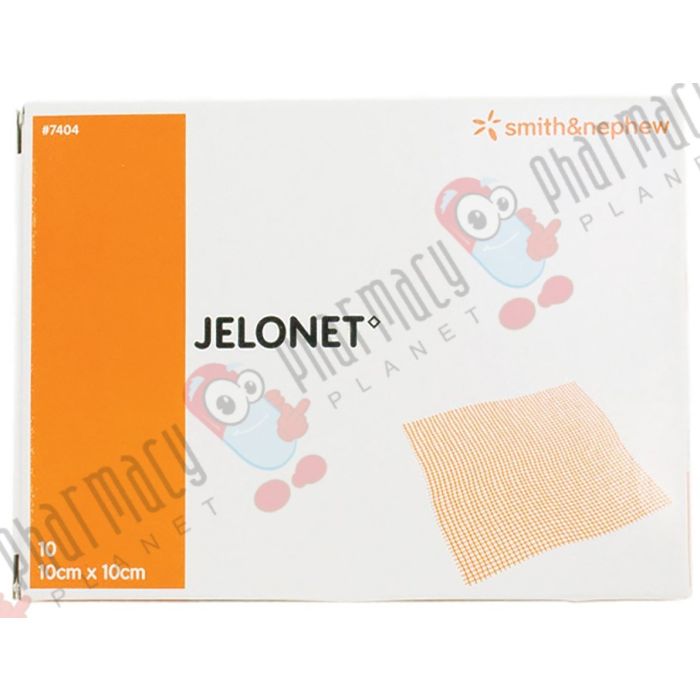
Jelonet Dressing | Paraffin Gauze Wound Contact Layer for Burns and Wounds
Removing a dressing that has bonded to a healing wound surface can undo the progress of days of healing and cause significant pain. Paraffin gauze dressings were developed specifically to address this: the paraffin in the gauze prevents the fibres from adhering to wound tissue and new granulation, allowing the dressing to be lifted without pulling on the wound bed. Jelonet Dressing is a paraffin gauze wound contact layer from Smith & Nephew, available in six configurations from small squares to a 15cm x 2m roll. Secondary dressing required. No antiseptic. No prescription needed.
What Is Jelonet Dressing?
Jelonet Dressing is a regulated medical device from Smith & Nephew. It is a wound contact layer consisting of woven cotton gauze impregnated with white soft paraffin. The gauze has an open mesh structure; the weave creates pores that allow wound exudate to pass through from the wound surface into the secondary dressing placed above it. The paraffin fills the fibres of the gauze and prevents them from bonding with wound tissue as healing progresses and exudate dries.
Jelonet Dressing is a primary wound contact layer only. It has no inherent absorbency; the paraffin in the gauze is hydrophobic and repels rather than absorbs fluid. Wound exudate passes through the mesh pores into the secondary absorbent dressing above. Without a secondary dressing, there is nothing to absorb exudate, and the wound cannot be adequately managed. A secondary dressing must always be applied over Jelonet Dressing.
Jelonet Dressing contains no antiseptic agent. It differs from Bactigras, which is chlorhexidine-impregnated paraffin gauze. Jelonet is plain paraffin gauze, appropriate for clean wounds, burns, donor sites, skin grafts, and wounds where the wound contact layer needs to be atraumatic at removal without antimicrobial action. Where a paraffin gauze with an antiseptic is clinically indicated, Bactigras should be used instead.
Six configurations are available covering a range of wound dimensions and clinical applications, from small 5cm x 5cm squares to the 15cm x 2m roll for extensive wound areas.
Jelonet Dressing has no antiseptic action. It is not appropriate for infected wounds. If the wound shows signs of infection, seek clinical assessment. Jelonet Dressing is a wound contact layer only; it must always be used with a secondary absorbent dressing placed over it. Without a secondary dressing, Jelonet provides no exudate management. The 15cm x 2m roll and the 10cm x 40cm format are for large wound areas such as burns, donor sites, and extensive skin conditions and should be used under clinical supervision.
How Jelonet Dressing Works
Paraffin and Low Adherence
White soft paraffin is a semi-solid water-repelling material derived from petroleum. When cotton gauze fibres are impregnated with paraffin, the fibres become coated with a hydrophobic layer that prevents them from forming bonds with wound tissue. As a wound heals, new granulation tissue forms at the wound surface and new epithelial cells migrate across the wound. Without paraffin, dry gauze fibres become embedded in this new tissue as exudate dries, and removal pulls the fibres free and damages the healing surface. The paraffin coating prevents this bonding, allowing the gauze to be lifted from the wound with less mechanical disruption to the tissue.
Open Mesh Exudate Passage
The open mesh structure of Jelonet gauze allows wound exudate to pass through the pores in the weave and be absorbed by the secondary dressing above. This is the mechanism by which the wound is kept from becoming waterlogged - the exudate does not pool at the wound surface beneath the gauze but moves upward through the mesh. The secondary dressing draws exudate upward by capillary action, keeping the wound surface at an appropriate moisture level. Choosing a secondary dressing with adequate absorbency for the wound's exudate output is important for this system to work effectively.
Suitability for Burns and Skin Grafts
Burns and skin graft sites are among the most common clinical applications for paraffin gauze. Burn wound surfaces are highly susceptible to adherence-related trauma at dressing changes because the tissue is fragile and the wound is often extensive. Paraffin gauze provides a wound contact layer that allows exudate to drain while minimising dressing to wound adhesion. For skin graft sites, the paraffin gauze is applied directly over the graft and covered with an absorbent secondary dressing. The low adherence property protects the graft from being disturbed at the first and subsequent dressing changes.
How to Apply Jelonet Dressing
Preparation
- Wash hands and use gloves.
- Clean the wound as directed.
- Prepare the secondary absorbent dressing before opening the Jelonet packaging.
Application
- Cut or fold Jelonet to fit the wound if needed.
- Apply Jelonet directly against the wound surface with the gauze lying flat against the wound bed.
- Apply the secondary absorbent dressing immediately over the Jelonet.
- Secure with tape, bandage, or compression as appropriate for the wound site.
- Label with the date and time.
Removal
- Irrigate with sterile saline if the Jelonet is adhering to the wound - even with paraffin, some adherence can occur with certain wound types or prolonged wear.
- Lift the Jelonet gently from the wound surface, supporting the wound edges.
- Assess the wound at each change.
Apply Jelonet as a single layer against the wound surface. Multiple layers of Jelonet applied over each other increase the amount of paraffin at the wound contact site and can interfere with exudate drainage through the mesh. For large wound areas use size up to the 10cm x 40cm or 15cm x 2m format rather than overlapping multiple smaller pieces.
Available Configurations
Jelonet 5cm x 5cm - Pack of 5
Small squares for minor wounds, small burns, digit wound sites, and localised wound surfaces. A pack of five suitable for a small stock at home or in a clinical setting.
Jelonet 5cm x 5cm - Pack of 50
The same small square format in a larger bulk pack of fifty. Suited to clinical settings or regular high-volume use, where the pack of five would need frequent replenishment.
Jelonet 10cm x 7cm - Single
An individually wrapped single dressing for a moderate-sized wound or for wound sites where one piece is required per change without the need for a larger pack. Convenient for community or home use where a single application is needed.
Jelonet 10cm x 10cm - Pack of 10
A medium square for moderate-sized wounds. A commonly used size across a range of wound types, including pressure ulcer wound beds, burns at intermediate stages of healing, and other wound sites where 10cm x 10cm coverage is appropriate.
Jelonet 10cm x 40cm - Pack of 10
A large rectangular format for extended wound areas, including longer burns, extensive leg ulcer surfaces, and wound sites where a larger coverage area is needed. Can be cut to shorter lengths if required. Suited to clinical use.
Jelonet 15cm x 2m - Pack of 12
A roll format providing the largest available coverage from the Jelonet range. Used for extensive burns, large skin graft donor sites, and other major wound areas requiring broad paraffin gauze wound contact coverage. Strips can be cut from the roll to the required length and applied across the wound surface. The pack of twelve rolls is suited to clinical settings managing larger numbers of burn or graft patients. Use under clinical supervision for wound areas of this scale.
Secondary absorbent dressing is always required with all six configurations.
Safety Information and Precautions
Do Not Use Jelonet Dressing If
- The wound shows clinical signs of infection - no antimicrobial action.
- Antimicrobial coverage at the wound contact layer is clinically indicated - use Bactigras in these situations.
- Known sensitivity to paraffin or cotton gauze components.
Precautions
- Always apply a secondary absorbent dressing over Jelonet.
- Apply as a single layer - multiple layers of paraffin gauze can impede exudate drainage.
- Single use only.
- For large wound areas (15cm x 2m roll format), use under clinical supervision.
Adverse Effects
- Paraffin accumulation on the wound and surrounding skin with prolonged use - change regularly and cleanse the wound area.
- Some adherence can still occur with very dry wound surfaces or prolonged wear periods despite the paraffin. Irrigate with saline before removal if needed.
Suitability
Wounds and Situations Where Jelonet Dressing Is Appropriate
- Burns at all stages of healing where a low adherence wound contact layer is the clinical priority
- Skin graft donor and recipient sites where protecting new or grafted tissue from adherence-related trauma at dressing changes is essential
- Clean granulating wounds where a wound contact layer that allows exudate drainage while minimising tissue disruption on removal is needed
- Any wound site where a simple, effective paraffin gauze primary contact layer is appropriate alongside an absorbent secondary layer
- Adults and children
Jelonet vs Bactigras
Both Jelonet and Bactigras are paraffin gauze wound contact layers from Smith & Nephew. The difference is the active ingredient. Jelonet contains plain paraffin with no antiseptic - it is appropriate for clean wounds where antimicrobial coverage is not needed. Bactigras contains chlorhexidine acetate in addition to paraffin, providing local antimicrobial action at the wound contact surface. Choose Jelonet for clean wounds where atraumatic removal is the priority. Choose Bactigras when local antimicrobial action at the wound contact layer is also clinically indicated.
Purchasing Jelonet Dressing
Jelonet Dressing is a regulated medical device and does not require a prescription. All six configurations are available from Pharmacy Planet without a clinical consultation.
Our pharmacists can advise on Jelonet configuration selection, appropriate secondary dressing choice, and whether Jelonet or Bactigras is the more appropriate paraffin gauze for a specific wound.
Burns, skin grafts, and large or complex wounds should be managed under clinical supervision. For these wound types, dressing selection is part of a broader clinical management plan overseen by a burns unit, tissue viability nurse, or clinical team.
Storage
- Store in a cool, dry place away from direct heat and sunlight.
- Do not store above 25°C.
- Keep in original sealed packaging until immediately before use.
- Do not use if packaging is damaged.
- Check the expiry date before use.
- Apply as soon as the packaging is opened.
- Keep out of reach of children.
- Dispose of used dressings as clinical waste.
Why Choose Pharmacy Planet?
Pharmacy Planet is a GPhC registered online pharmacy. All six Jelonet Dressing configurations are genuine Smith & Nephew products stocked through regulated UK supply chains.
Our pharmacists can advise on paraffin gauze selection and on appropriate secondary dressings for different wound types and clinical situations.
References
- Smith & Nephew. Jelonet Dressing — Instructions for Use. Smith & Nephew. https://www.smith-nephew.com. Accessed June 2026.
- National Institute for Health and Care Excellence. Wound care: burn management. https://www.nice.org.uk. Accessed June 2026.
- Wounds UK. Principles of wound assessment and management. https://www.wounds-uk.com. Accessed June 2026.
- NHS. Burns and scalds. https://www.nhs.uk/conditions/burns-and-scalds. Accessed June 2026.
Removing a dressing that has bonded to a healing wound surface can undo the progress of days of healing and cause significant pain. Paraffin gauze dressings were developed specifically to address this: the paraffin in the gauze prevents the fibres from adhering to wound tissue and new granulation, allowing the dressing to be lifted without pulling on the wound bed. Jelonet Dressing is a paraffin gauze wound contact layer from Smith & Nephew, available in six configurations from small squares to a 15cm x 2m roll. Secondary dressing required. No antiseptic. No prescription needed.
Jelonet Dressing is a regulated medical device from Smith & Nephew. It is a wound contact layer consisting of woven cotton gauze impregnated with white soft paraffin. The gauze has an open mesh structure; the weave creates pores that allow wound exudate to pass through from the wound surface into the secondary dressing placed above it. The paraffin fills the fibres of the gauze and prevents them from bonding with wound tissue as healing progresses and exudate dries.
Jelonet Dressing is a primary wound contact layer only. It has no inherent absorbency; the paraffin in the gauze is hydrophobic and repels rather than absorbs fluid. Wound exudate passes through the mesh pores into the secondary absorbent dressing above. Without a secondary dressing, there is nothing to absorb exudate, and the wound cannot be adequately managed. A secondary dressing must always be applied over Jelonet Dressing.
Jelonet Dressing contains no antiseptic agent. It differs from Bactigras, which is chlorhexidine-impregnated paraffin gauze. Jelonet is plain paraffin gauze, appropriate for clean wounds, burns, donor sites, skin grafts, and wounds where the wound contact layer needs to be atraumatic at removal without antimicrobial action. Where a paraffin gauze with an antiseptic is clinically indicated, Bactigras should be used instead.
Six configurations are available covering a range of wound dimensions and clinical applications, from small 5cm x 5cm squares to the 15cm x 2m roll for extensive wound areas.
Jelonet Dressing has no antiseptic action. It is not appropriate for infected wounds. If the wound shows signs of infection, seek clinical assessment. Jelonet Dressing is a wound contact layer only; it must always be used with a secondary absorbent dressing placed over it. Without a secondary dressing, Jelonet provides no exudate management. The 15cm x 2m roll and the 10cm x 40cm format are for large wound areas such as burns, donor sites, and extensive skin conditions and should be used under clinical supervision.
Paraffin and Low Adherence
White soft paraffin is a semi-solid water-repelling material derived from petroleum. When cotton gauze fibres are impregnated with paraffin, the fibres become coated with a hydrophobic layer that prevents them from forming bonds with wound tissue. As a wound heals, new granulation tissue forms at the wound surface and new epithelial cells migrate across the wound. Without paraffin, dry gauze fibres become embedded in this new tissue as exudate dries, and removal pulls the fibres free and damages the healing surface. The paraffin coating prevents this bonding, allowing the gauze to be lifted from the wound with less mechanical disruption to the tissue.
Open Mesh Exudate Passage
The open mesh structure of Jelonet gauze allows wound exudate to pass through the pores in the weave and be absorbed by the secondary dressing above. This is the mechanism by which the wound is kept from becoming waterlogged - the exudate does not pool at the wound surface beneath the gauze but moves upward through the mesh. The secondary dressing draws exudate upward by capillary action, keeping the wound surface at an appropriate moisture level. Choosing a secondary dressing with adequate absorbency for the wound's exudate output is important for this system to work effectively.
Suitability for Burns and Skin Grafts
Burns and skin graft sites are among the most common clinical applications for paraffin gauze. Burn wound surfaces are highly susceptible to adherence-related trauma at dressing changes because the tissue is fragile and the wound is often extensive. Paraffin gauze provides a wound contact layer that allows exudate to drain while minimising dressing to wound adhesion. For skin graft sites, the paraffin gauze is applied directly over the graft and covered with an absorbent secondary dressing. The low adherence property protects the graft from being disturbed at the first and subsequent dressing changes.
Preparation
- Wash hands and use gloves.
- Clean the wound as directed.
- Prepare the secondary absorbent dressing before opening the Jelonet packaging.
Application
- Cut or fold Jelonet to fit the wound if needed.
- Apply Jelonet directly against the wound surface with the gauze lying flat against the wound bed.
- Apply the secondary absorbent dressing immediately over the Jelonet.
- Secure with tape, bandage, or compression as appropriate for the wound site.
- Label with the date and time.
Removal
- Irrigate with sterile saline if the Jelonet is adhering to the wound - even with paraffin, some adherence can occur with certain wound types or prolonged wear.
- Lift the Jelonet gently from the wound surface, supporting the wound edges.
- Assess the wound at each change.
Apply Jelonet as a single layer against the wound surface. Multiple layers of Jelonet applied over each other increase the amount of paraffin at the wound contact site and can interfere with exudate drainage through the mesh. For large wound areas use size up to the 10cm x 40cm or 15cm x 2m format rather than overlapping multiple smaller pieces.
Jelonet 5cm x 5cm - Pack of 5
Small squares for minor wounds, small burns, digit wound sites, and localised wound surfaces. A pack of five suitable for a small stock at home or in a clinical setting.
Jelonet 5cm x 5cm - Pack of 50
The same small square format in a larger bulk pack of fifty. Suited to clinical settings or regular high-volume use, where the pack of five would need frequent replenishment.
Jelonet 10cm x 7cm - Single
An individually wrapped single dressing for a moderate-sized wound or for wound sites where one piece is required per change without the need for a larger pack. Convenient for community or home use where a single application is needed.
Jelonet 10cm x 10cm - Pack of 10
A medium square for moderate-sized wounds. A commonly used size across a range of wound types, including pressure ulcer wound beds, burns at intermediate stages of healing, and other wound sites where 10cm x 10cm coverage is appropriate.
Jelonet 10cm x 40cm - Pack of 10
A large rectangular format for extended wound areas, including longer burns, extensive leg ulcer surfaces, and wound sites where a larger coverage area is needed. Can be cut to shorter lengths if required. Suited to clinical use.
Jelonet 15cm x 2m - Pack of 12
A roll format providing the largest available coverage from the Jelonet range. Used for extensive burns, large skin graft donor sites, and other major wound areas requiring broad paraffin gauze wound contact coverage. Strips can be cut from the roll to the required length and applied across the wound surface. The pack of twelve rolls is suited to clinical settings managing larger numbers of burn or graft patients. Use under clinical supervision for wound areas of this scale.
Secondary absorbent dressing is always required with all six configurations.
Do Not Use Jelonet Dressing If
- The wound shows clinical signs of infection - no antimicrobial action.
- Antimicrobial coverage at the wound contact layer is clinically indicated - use Bactigras in these situations.
- Known sensitivity to paraffin or cotton gauze components.
Precautions
- Always apply a secondary absorbent dressing over Jelonet.
- Apply as a single layer - multiple layers of paraffin gauze can impede exudate drainage.
- Single use only.
- For large wound areas (15cm x 2m roll format), use under clinical supervision.
Adverse Effects
- Paraffin accumulation on the wound and surrounding skin with prolonged use - change regularly and cleanse the wound area.
- Some adherence can still occur with very dry wound surfaces or prolonged wear periods despite the paraffin. Irrigate with saline before removal if needed.
Wounds and Situations Where Jelonet Dressing Is Appropriate
- Burns at all stages of healing where a low adherence wound contact layer is the clinical priority
- Skin graft donor and recipient sites where protecting new or grafted tissue from adherence-related trauma at dressing changes is essential
- Clean granulating wounds where a wound contact layer that allows exudate drainage while minimising tissue disruption on removal is needed
- Any wound site where a simple, effective paraffin gauze primary contact layer is appropriate alongside an absorbent secondary layer
- Adults and children
Jelonet vs Bactigras
Both Jelonet and Bactigras are paraffin gauze wound contact layers from Smith & Nephew. The difference is the active ingredient. Jelonet contains plain paraffin with no antiseptic - it is appropriate for clean wounds where antimicrobial coverage is not needed. Bactigras contains chlorhexidine acetate in addition to paraffin, providing local antimicrobial action at the wound contact surface. Choose Jelonet for clean wounds where atraumatic removal is the priority. Choose Bactigras when local antimicrobial action at the wound contact layer is also clinically indicated.
Jelonet Dressing is a regulated medical device and does not require a prescription. All six configurations are available from Pharmacy Planet without a clinical consultation.
Our pharmacists can advise on Jelonet configuration selection, appropriate secondary dressing choice, and whether Jelonet or Bactigras is the more appropriate paraffin gauze for a specific wound.
Burns, skin grafts, and large or complex wounds should be managed under clinical supervision. For these wound types, dressing selection is part of a broader clinical management plan overseen by a burns unit, tissue viability nurse, or clinical team.
- Store in a cool, dry place away from direct heat and sunlight.
- Do not store above 25°C.
- Keep in original sealed packaging until immediately before use.
- Do not use if packaging is damaged.
- Check the expiry date before use.
- Apply as soon as the packaging is opened.
- Keep out of reach of children.
- Dispose of used dressings as clinical waste.
Pharmacy Planet is a GPhC registered online pharmacy. All six Jelonet Dressing configurations are genuine Smith & Nephew products stocked through regulated UK supply chains.
Our pharmacists can advise on paraffin gauze selection and on appropriate secondary dressings for different wound types and clinical situations.
References
- Smith & Nephew. Jelonet Dressing — Instructions for Use. Smith & Nephew. https://www.smith-nephew.com. Accessed June 2026.
- National Institute for Health and Care Excellence. Wound care: burn management. https://www.nice.org.uk. Accessed June 2026.
- Wounds UK. Principles of wound assessment and management. https://www.wounds-uk.com. Accessed June 2026.
- NHS. Burns and scalds. https://www.nhs.uk/conditions/burns-and-scalds. Accessed June 2026.
Jelonet Dressing is a paraffin gauze wound contact layer from Smith & Nephew for burns, skin grafts, and other wounds where atraumatic dressing removal is a clinical priority. The paraffin in the gauze prevents the fibres from bonding to wound tissue, reducing trauma at dressing changes. Secondary absorbent dressing always required. Six configurations from 5cm x 5cm squares to a 15cm x 2m roll. No antiseptic. No prescription required.
Jelonet Dressing is designed to reduce adherence to wound tissue. The paraffin coating on the gauze fibres prevents bonding between the gauze and new granulation or epithelial tissue at the wound surface. This makes removal less traumatic than dry gauze. Some adherence may still occur with very dry wound surfaces or if the dressing is left in place for an extended period. Irrigating with sterile saline before removal can further reduce any adherence that has developed.
The secondary dressing choice depends on the wound's exudate output. Jelonet has no absorbency of its own. Exudate passes through the mesh pores into the secondary dressing. For lightly exuding wounds, a non-woven swab or low-absorbency pad is appropriate. For moderately exuding wounds, a foam pad or absorbent island dressing is suitable. For heavily exuding wounds, a superabsorbent pad may be needed. The secondary must cover the Jelonet fully and be secured in place. Our pharmacists can advise on secondary dressing selection.
Yes. Jelonet Dressing is widely used on burn wounds. The low adherence property of paraffin gauze is particularly valuable on burns, where wound tissue is fragile, and dressing changes can be painful and traumatic if the wound contact layer adheres. Jelonet allows exudate to drain through the mesh into the secondary dressing while maintaining a wound contact layer that can be removed with minimal disruption to the healing tissue. Burns are always managed under clinical supervision, and dressing selection and change protocols for burns are part of the clinical management plan.
Both are paraffin gauze wound contact layers from Smith & Nephew with the same mesh structure and low adherence properties. The difference is the active ingredient. Jelonet contains plain paraffin only and has no antimicrobial action. Bactigras contains chlorhexidine acetate in addition to paraffin, providing local antimicrobial action at the wound surface. Use Jelonet for clean wounds where antimicrobial coverage is not needed. Use Bactigras when local antimicrobial action is also a clinical requirement.
Paraffin gauze works by coating the cotton gauze fibres with white soft paraffin. Paraffin is hydrophobic; it repels water and does not bond with wet wound tissue. When the gauze is placed against a wound, the paraffin-coated fibres do not embed in the wound surface as exudate dries. The open mesh weave allows exudate to pass through the gauze into the secondary dressing above. When the dressing is changed, the paraffin coating means the gauze separates from the wound surface with less mechanical disruption than dry, uncoated gauze would cause.
Jelonet Dressing is used in clinical settings for burns in children and adults. For a child with a burn, the immediate priority is cooling the burn under cool running water for at least 20 minutes and seeking medical attention. Do not apply any material to a burn before medical assessment unless directed by a healthcare professional. Minor burns may be suitable for home management with paraffin gauze under clinical guidance. Significant burns in children always require clinical assessment and management.
No. Jelonet Dressing is a regulated medical device and does not require a prescription. All six configurations are available from Pharmacy Planet without a clinical consultation. For burns, skin grafts, and complex wound management, dressing selection should be guided by the clinical team responsible for the wound.

clinical consultation
Answer a few questions on your health and your fitness goals.

assessment
Our clinicians will review your clinical questionnaire to make sure treatment is right for you.

aboard!
Once approved, you will access our wealth of experience and resources curated by our team and begin your clinical journey.
Start your journey with us
Need Help?

Start your weight loss journey heading in the right direction. Our team are here to help. Whether you’re unsure about which medicine is right for you or need help navigating the world of weight loss drugs, our team are on hand to help you make the right decision. We can put you in touch with one of our experienced weight loss clinicians so you can be sure you’re making the best decision with the most accurate information.
To get in touch, contact our Customer Service team on 0800 978 8956 or email headoffice@pharmacyplanet.com.

Review By
HARMINDER ‘HARMY’ KAUR
Last Updated On : Mar 13 2026
BSc(hons) Pharmacy
GPhC Number: 2061107

Authored By
GURDEV SEHMI
Last Reviewed On : Mar 23 2026
BSc Pharm, MRPharmS, Independent Prescriber, Superintendent Pharmacist, Clinical Lead
GPhC Number: 2050925