








Facebook Pixel
New Patients – Get 10% Off Your First Consultation with Code: NEW10 at Checkout

CONVAMAX NON ADHESIVE

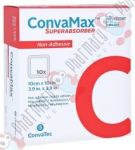
ConvaMax Superabsorber Wound Dressing aids in the protection and healing of skin from excess fluid. The dressing is also able to promote the retention of building bacteria. The dressing uses three layers to absorb and keep away exudate: a conformable wicking layer, a super-absorbent core and a protective backing. Convamax also includes Hydrofiber technology which helps to ensure the absorption and retention of excess fluids.
prodName
CONVAMAX NON ADHESIVE
£24.49
Total
Starts at £24.49
Price Comparison

Select your preferred options and see the best price

PackPrice (£)
-10cm x 10cm1024.49
-10cm x 20cm1030.49
-20cm x 40cm1063.49
-20cm x 30cm1072.49

It looks like you missed filling in questions from the last consultation.Click Here to submit your response.

Notify me once available
Enter your email to get notified

Out of Stock
  • No hidden fees

  • Secure checkout

  • UK Regulated online pharmacy

  • Trusted by over 100,000+ customers

ConvaMax Non-Adhesive | Superabsorbent Dressing for Heavily Exuding Wounds

Wounds that produce very heavy volumes of exudate present two related clinical problems: finding a dressing with sufficient capacity to last a meaningful wear period and ensuring that absorbed fluid does not work its way back to the wound surface when the patient rests or moves. ConvaMax Non-Adhesive is a superabsorbent wound pad from ConvaTec that addresses both through a polymer-based construction designed to draw in large volumes of fluid and hold them permanently regardless of the pressure applied to the dressing. Four sizes from 10cm x 10cm to 20cm x 40cm. No adhesive. Secondary fixation required. No active pharmaceutical ingredients. No prescription required.

What Is ConvaMax Non-Adhesive?

ConvaMax Non-Adhesive is the full product name, derived from the range title ConvaMax Superabsorber. It is a Class IIb regulated medical device from ConvaTec. The dressing is a multi-layer absorbent pad in which a superabsorbent polymer layer forms the primary fluid retention mechanism. The pad has a soft wound contact surface, the superabsorbent polymer core, and an outer facing layer. There is no adhesive border or coating of any kind, the dressing requires external fixation at every application.

The distinction between superabsorbent polymer dressings and conventional foam or fibre dressings lies in how fluid is held once it is absorbed. Conventional absorbent dressings hold fluid within a matrix of foam cells, fibres, or gel that can release the fluid if compressed. When a patient lies or sits on the dressing, the pressure can drive absorbed fluid back toward the wound surface, a problem known as rewetting. The superabsorbent polymer in ConvaMax Non-Adhesive binds absorbed fluid through a chemical process that locks it permanently within the polymer structure. The fluid does not release under normal clinical compression forces. This is the defining clinical property of superabsorbent dressings over conventional absorbents.

ConvaMax Non-Adhesive is available in four sizes: 10cm x 10cm, 10cm x 20cm, 20cm x 30cm, and 20cm x 40cm. The two larger sizes are significantly larger than most wound dressings and are intended for extensive wound areas including large pressure ulcers, post-surgical wounds with high exudate, and other situations where broad coverage and high fluid retention are needed simultaneously.

There are no active pharmaceutical ingredients. ConvaMax Non-Adhesive does not treat infection and does not provide antimicrobial coverage. It manages wound exudate only.

ConvaMax Non-Adhesive has no adhesive and will not hold itself against the skin. It must be secured with secondary fixation, a bandage, retention sheet, or equivalent, at every application. An unsecured superabsorbent pad on a wound will shift and cause friction injury. ConvaMax Non-Adhesive contains no antimicrobial agent. It is not appropriate for infected wounds.

How ConvaMax Non-Adhesive Works

Superabsorbent Polymer Core

The core of ConvaMax Non-Adhesive contains a superabsorbent polymer — a material engineered to absorb and retain large volumes of aqueous fluid relative to its own weight. When wound exudate contacts the polymer, it is drawn into the polymer structure and undergoes a process of swelling and chemical binding. The fluid becomes incorporated into the polymer matrix and does not freely move within it. Under compression - including the sustained pressure of a patient's body weight against a wound site such as the sacrum or heel - the bound fluid remains locked within the polymer rather than being released back toward the wound surface.

Why Rewetting Matters in Wound Care

Rewetting is the return of absorbed fluid to the wound surface when an absorbent dressing is compressed. It occurs with conventional foam and fibre dressings because the fluid is held loosely within the absorbent matrix. When pressure is applied, the fluid is squeezed outward toward the lowest resistance - which is often the wound contact surface. Rewetting returns exudate to the wound bed, re-wets the periwound skin, and increases the risk of maceration. For wounds on pressure sites where the patient is recumbent for extended periods, rewetting from a conventional dressing is a persistent clinical challenge. The locked fluid property of the superabsorbent polymer addresses this directly.

Wound Contact Surface and Secondary Fixation

The wound contact surface of ConvaMax Non-Adhesive is designed to be non-adherent to moist wound tissue, allowing the pad to be lifted at removal without significant bonding to the wound bed. Exudate passes through this surface layer into the polymer core above. The outer facing layer provides structural integrity to the pad. Because there is no adhesive, the fixation method is chosen based on the wound location, the patient's mobility, and the surrounding skin condition.

How to Use ConvaMax Non-Adhesive

Before Applying

  • Wash hands and use gloves.
  • Clean the wound as directed.
  • Prepare the secondary fixation product before applying the dressing.

Application

  • Select the appropriate size: 10cm x 10cm, 10cm x 20cm, 20cm x 30cm, or 20cm x 40cm.
  • Place the dressing over the wound with the wound contact surface facing the wound bed.
  • Apply secondary fixation immediately to hold the dressing in place.
  • For wounds on pressure sites, ensure fixation holds the pad securely when the patient is repositioned.
  • Note the date and time of application.

Removal

  • Remove secondary fixation first, then lift the pad from the wound.
  • The wound contact surface should separate without significant resistance.
  • Assess the wound at each change.
  • Monitor whether fluid is reaching the pad edges - if so, increase change frequency or consider a larger size.

For wounds on pressure-loaded sites, ConvaMax Non-Adhesive can be used under compression or against a pressure-redistributing surface. The locked fluid property means the polymer does not release absorbed exudate when compressed. Check that secondary fixation remains secure after repositioning, particularly for patients with high levels of movement or those managed with regular turning regimes.

Available Sizes

ConvaMax Non-Adhesive 10cm x 10cm

A medium square suited to moderate-sized wounds including pressure ulcers at earlier stages, venous leg ulcer areas, and post-operative wounds where superabsorbent polymer fluid retention is indicated and a 10cm x 10cm coverage area is appropriate.

ConvaMax Non-Adhesive 10cm x 20cm

A rectangular format for elongated wound sites where the wound runs longer than it is wide. Suitable for lower limb wounds, elongated surgical wounds, and other sites where a rectangular pad provides better coverage alignment than a square.

ConvaMax Non-Adhesive 20cm x 30cm

A large format for extensive wound areas requiring broad superabsorbent coverage. Suited to larger pressure ulcers, large post-operative wounds with very high exudate, and other extensive wounds under clinical supervision where a standard foam or fibre dressing is insufficient.

ConvaMax Non-Adhesive 20cm x 40cm

The largest size in the range. Provides the broadest possible wound coverage with superabsorbent polymer fluid retention. For very extensive wound areas - including large trunk wounds, extensive pressure wound areas, or wound sites requiring the maximum available non-adhesive superabsorbent coverage. Use under clinical supervision.

The two larger sizes are significantly bigger than standard wound dressings and are intended for clinical settings and complex wound management rather than routine self-managed wound care. For the smaller sizes, self-management is appropriate with suitable guidance on fixation.

Safety Information and Precautions

Do Not Use ConvaMax Non-Adhesive If

  • The wound is infected as no antimicrobial action is present.
  • The wound is dry or minimally exuding - superabsorbent dressings are designed for high exudate volumes.
  • Known sensitivity to any component of the dressing.
  • Secondary fixation cannot be safely applied at the wound site.

Precautions

  • Always apply and confirm secondary fixation immediately after placing the dressing.
  • Do not apply fixation so tightly that it restricts circulation, particularly at lower limb wound sites and in patients with diabetes or peripheral vascular disease.
  • Reassess at each change. If exudate volume falls, a less absorbent dressing may be more appropriate.
  • Single use only.
  • Remove before MRI.

Adverse Effects

  • Wound desiccation if used on a wound transitioning from heavy to low exudate without dressing review.
  • Skin irritation under secondary fixation - related to the fixation method rather than the dressing pad itself.

Suitability

Wounds Where ConvaMax Non-Adhesive Is Appropriate

  • Very heavily exuding wounds where standard foam dressings saturate within an unacceptably short wear period and more frequent changes would be clinically or practically difficult
  • Wounds on pressure-loaded sites including the sacrum, heels, and other bony prominences, where rewetting from conventional absorbent dressings is a clinical problem
  • Large wound areas requiring broad absorbent coverage that extends beyond the dimensions available in standard adhesive foam formats
  • Wounds where no adhesive border is clinically appropriate - fragile periwound skin, excoriated skin around the wound, or sites where adhesive application is contraindicated
  • Adults under clinical supervision for complex wound management

ConvaMax Non-Adhesive and Biatain Super Adhesive Dressing

ConvaMax Non-Adhesive (ConvaTec) and Biatain Super Adhesive Dressing (Coloplast) are both superabsorbent polymer dressings for heavily exuding wounds. Both use a polymer that locks fluid and prevents rewetting under compression. The practical differences are the border and the size range. Biatain Super Adhesive Dressing has an integrated adhesive border and four sizes up to 20cm x 20cm. ConvaMax Non-Adhesive has no border and requires secondary fixation but extends to the larger 20cm x 30cm and 20cm x 40cm formats. Choose based on whether an adhesive or non-adhesive format is clinically appropriate and whether the larger sizes are needed.

Purchasing ConvaMax Non-Adhesive

ConvaMax Non-Adhesive is a regulated medical device and does not require a prescription. All four sizes are available from Pharmacy Planet.

Our pharmacists can advise on size selection and on whether a superabsorbent non-adhesive format or a superabsorbent adhesive format such as Biatain Super Adhesive Dressing is better suited to a specific wound and patient.

Wounds producing very heavy exudate, large pressure ulcers, and complex wounds under specialist management should be assessed by a tissue viability nurse, district nurse, or clinical team. Dressing selection for these wound types is part of a broader clinical management plan.

Storage

  • Store in a cool, dry place away from direct light.
  • Do not store above 25°C.
  • Keep in original sealed packaging until immediately before use.
  • Do not use if packaging is damaged.
  • Check the expiry date before use.
  • Apply as soon as the packaging is opened.
  • Keep out of reach of children.
  • Dispose of used dressings as clinical waste.

Why Choose Pharmacy Planet?

Pharmacy Planet is a GPhC registered online pharmacy. All four sizes of ConvaMax Non-Adhesive are genuine ConvaTec products sourced through regulated UK supply chains.

Our pharmacists can advise on superabsorbent dressing selection across the range and on secondary fixation options for different wound sites and patient situations.

References

  1. ConvaTec. ConvaMax Superabsorber Non-Adhesive — Instructions for Use. ConvaTec. https://www.convatec.com. Accessed May 2026.
  2. National Institute for Health and Care Excellence. Pressure ulcers: prevention and management (CG179). https://www.nice.org.uk/guidance/cg179. Accessed May 2026.
  3. Wounds UK. Best Practice Statement: Wound exudate — effective assessment and management. https://www.wounds-uk.com. Accessed May 2026.
  4. NHS. Pressure sores (pressure ulcers). https://www.nhs.uk/conditions/pressure-sores. Accessed May 2026.
CONVAMAX NON ADHESIVE

Wounds that produce very heavy volumes of exudate present two related clinical problems: finding a dressing with sufficient capacity to last a meaningful wear period and ensuring that absorbed fluid does not work its way back to the wound surface when the patient rests or moves. ConvaMax Non-Adhesive is a superabsorbent wound pad from ConvaTec that addresses both through a polymer-based construction designed to draw in large volumes of fluid and hold them permanently regardless of the pressure applied to the dressing. Four sizes from 10cm x 10cm to 20cm x 40cm. No adhesive. Secondary fixation required. No active pharmaceutical ingredients. No prescription required.

ConvaMax Non-Adhesive is the full product name, derived from the range title ConvaMax Superabsorber. It is a Class IIb regulated medical device from ConvaTec. The dressing is a multi-layer absorbent pad in which a superabsorbent polymer layer forms the primary fluid retention mechanism. The pad has a soft wound contact surface, the superabsorbent polymer core, and an outer facing layer. There is no adhesive border or coating of any kind, the dressing requires external fixation at every application.

The distinction between superabsorbent polymer dressings and conventional foam or fibre dressings lies in how fluid is held once it is absorbed. Conventional absorbent dressings hold fluid within a matrix of foam cells, fibres, or gel that can release the fluid if compressed. When a patient lies or sits on the dressing, the pressure can drive absorbed fluid back toward the wound surface, a problem known as rewetting. The superabsorbent polymer in ConvaMax Non-Adhesive binds absorbed fluid through a chemical process that locks it permanently within the polymer structure. The fluid does not release under normal clinical compression forces. This is the defining clinical property of superabsorbent dressings over conventional absorbents.

ConvaMax Non-Adhesive is available in four sizes: 10cm x 10cm, 10cm x 20cm, 20cm x 30cm, and 20cm x 40cm. The two larger sizes are significantly larger than most wound dressings and are intended for extensive wound areas including large pressure ulcers, post-surgical wounds with high exudate, and other situations where broad coverage and high fluid retention are needed simultaneously.

There are no active pharmaceutical ingredients. ConvaMax Non-Adhesive does not treat infection and does not provide antimicrobial coverage. It manages wound exudate only.

ConvaMax Non-Adhesive has no adhesive and will not hold itself against the skin. It must be secured with secondary fixation, a bandage, retention sheet, or equivalent, at every application. An unsecured superabsorbent pad on a wound will shift and cause friction injury. ConvaMax Non-Adhesive contains no antimicrobial agent. It is not appropriate for infected wounds.

Superabsorbent Polymer Core

The core of ConvaMax Non-Adhesive contains a superabsorbent polymer — a material engineered to absorb and retain large volumes of aqueous fluid relative to its own weight. When wound exudate contacts the polymer, it is drawn into the polymer structure and undergoes a process of swelling and chemical binding. The fluid becomes incorporated into the polymer matrix and does not freely move within it. Under compression - including the sustained pressure of a patient's body weight against a wound site such as the sacrum or heel - the bound fluid remains locked within the polymer rather than being released back toward the wound surface.

Why Rewetting Matters in Wound Care

Rewetting is the return of absorbed fluid to the wound surface when an absorbent dressing is compressed. It occurs with conventional foam and fibre dressings because the fluid is held loosely within the absorbent matrix. When pressure is applied, the fluid is squeezed outward toward the lowest resistance - which is often the wound contact surface. Rewetting returns exudate to the wound bed, re-wets the periwound skin, and increases the risk of maceration. For wounds on pressure sites where the patient is recumbent for extended periods, rewetting from a conventional dressing is a persistent clinical challenge. The locked fluid property of the superabsorbent polymer addresses this directly.

Wound Contact Surface and Secondary Fixation

The wound contact surface of ConvaMax Non-Adhesive is designed to be non-adherent to moist wound tissue, allowing the pad to be lifted at removal without significant bonding to the wound bed. Exudate passes through this surface layer into the polymer core above. The outer facing layer provides structural integrity to the pad. Because there is no adhesive, the fixation method is chosen based on the wound location, the patient's mobility, and the surrounding skin condition.

Before Applying

  • Wash hands and use gloves.
  • Clean the wound as directed.
  • Prepare the secondary fixation product before applying the dressing.

Application

  • Select the appropriate size: 10cm x 10cm, 10cm x 20cm, 20cm x 30cm, or 20cm x 40cm.
  • Place the dressing over the wound with the wound contact surface facing the wound bed.
  • Apply secondary fixation immediately to hold the dressing in place.
  • For wounds on pressure sites, ensure fixation holds the pad securely when the patient is repositioned.
  • Note the date and time of application.

Removal

  • Remove secondary fixation first, then lift the pad from the wound.
  • The wound contact surface should separate without significant resistance.
  • Assess the wound at each change.
  • Monitor whether fluid is reaching the pad edges - if so, increase change frequency or consider a larger size.

For wounds on pressure-loaded sites, ConvaMax Non-Adhesive can be used under compression or against a pressure-redistributing surface. The locked fluid property means the polymer does not release absorbed exudate when compressed. Check that secondary fixation remains secure after repositioning, particularly for patients with high levels of movement or those managed with regular turning regimes.

ConvaMax Non-Adhesive 10cm x 10cm

A medium square suited to moderate-sized wounds including pressure ulcers at earlier stages, venous leg ulcer areas, and post-operative wounds where superabsorbent polymer fluid retention is indicated and a 10cm x 10cm coverage area is appropriate.

ConvaMax Non-Adhesive 10cm x 20cm

A rectangular format for elongated wound sites where the wound runs longer than it is wide. Suitable for lower limb wounds, elongated surgical wounds, and other sites where a rectangular pad provides better coverage alignment than a square.

ConvaMax Non-Adhesive 20cm x 30cm

A large format for extensive wound areas requiring broad superabsorbent coverage. Suited to larger pressure ulcers, large post-operative wounds with very high exudate, and other extensive wounds under clinical supervision where a standard foam or fibre dressing is insufficient.

ConvaMax Non-Adhesive 20cm x 40cm

The largest size in the range. Provides the broadest possible wound coverage with superabsorbent polymer fluid retention. For very extensive wound areas - including large trunk wounds, extensive pressure wound areas, or wound sites requiring the maximum available non-adhesive superabsorbent coverage. Use under clinical supervision.

The two larger sizes are significantly bigger than standard wound dressings and are intended for clinical settings and complex wound management rather than routine self-managed wound care. For the smaller sizes, self-management is appropriate with suitable guidance on fixation.

Do Not Use ConvaMax Non-Adhesive If

  • The wound is infected as no antimicrobial action is present.
  • The wound is dry or minimally exuding - superabsorbent dressings are designed for high exudate volumes.
  • Known sensitivity to any component of the dressing.
  • Secondary fixation cannot be safely applied at the wound site.

Precautions

  • Always apply and confirm secondary fixation immediately after placing the dressing.
  • Do not apply fixation so tightly that it restricts circulation, particularly at lower limb wound sites and in patients with diabetes or peripheral vascular disease.
  • Reassess at each change. If exudate volume falls, a less absorbent dressing may be more appropriate.
  • Single use only.
  • Remove before MRI.

Adverse Effects

  • Wound desiccation if used on a wound transitioning from heavy to low exudate without dressing review.
  • Skin irritation under secondary fixation - related to the fixation method rather than the dressing pad itself.

Wounds Where ConvaMax Non-Adhesive Is Appropriate

  • Very heavily exuding wounds where standard foam dressings saturate within an unacceptably short wear period and more frequent changes would be clinically or practically difficult
  • Wounds on pressure-loaded sites including the sacrum, heels, and other bony prominences, where rewetting from conventional absorbent dressings is a clinical problem
  • Large wound areas requiring broad absorbent coverage that extends beyond the dimensions available in standard adhesive foam formats
  • Wounds where no adhesive border is clinically appropriate - fragile periwound skin, excoriated skin around the wound, or sites where adhesive application is contraindicated
  • Adults under clinical supervision for complex wound management

ConvaMax Non-Adhesive and Biatain Super Adhesive Dressing

ConvaMax Non-Adhesive (ConvaTec) and Biatain Super Adhesive Dressing (Coloplast) are both superabsorbent polymer dressings for heavily exuding wounds. Both use a polymer that locks fluid and prevents rewetting under compression. The practical differences are the border and the size range. Biatain Super Adhesive Dressing has an integrated adhesive border and four sizes up to 20cm x 20cm. ConvaMax Non-Adhesive has no border and requires secondary fixation but extends to the larger 20cm x 30cm and 20cm x 40cm formats. Choose based on whether an adhesive or non-adhesive format is clinically appropriate and whether the larger sizes are needed.

ConvaMax Non-Adhesive is a regulated medical device and does not require a prescription. All four sizes are available from Pharmacy Planet.

Our pharmacists can advise on size selection and on whether a superabsorbent non-adhesive format or a superabsorbent adhesive format such as Biatain Super Adhesive Dressing is better suited to a specific wound and patient.

Wounds producing very heavy exudate, large pressure ulcers, and complex wounds under specialist management should be assessed by a tissue viability nurse, district nurse, or clinical team. Dressing selection for these wound types is part of a broader clinical management plan.

  • Store in a cool, dry place away from direct light.
  • Do not store above 25°C.
  • Keep in original sealed packaging until immediately before use.
  • Do not use if packaging is damaged.
  • Check the expiry date before use.
  • Apply as soon as the packaging is opened.
  • Keep out of reach of children.
  • Dispose of used dressings as clinical waste.

Pharmacy Planet is a GPhC registered online pharmacy. All four sizes of ConvaMax Non-Adhesive are genuine ConvaTec products sourced through regulated UK supply chains.

Our pharmacists can advise on superabsorbent dressing selection across the range and on secondary fixation options for different wound sites and patient situations.

References

  1. ConvaTec. ConvaMax Superabsorber Non-Adhesive — Instructions for Use. ConvaTec. https://www.convatec.com. Accessed May 2026.
  2. National Institute for Health and Care Excellence. Pressure ulcers: prevention and management (CG179). https://www.nice.org.uk/guidance/cg179. Accessed May 2026.
  3. Wounds UK. Best Practice Statement: Wound exudate — effective assessment and management. https://www.wounds-uk.com. Accessed May 2026.
  4. NHS. Pressure sores (pressure ulcers). https://www.nhs.uk/conditions/pressure-sores. Accessed May 2026.
Frequently Asked Questions

ConvaMax Non-Adhesive is a superabsorbent wound pad from ConvaTec for very heavily exuding wounds. The superabsorbent polymer core locks absorbed fluid permanently, preventing it from being driven back to the wound surface under compression. No adhesive border; secondary fixation required. Four sizes: 10cm x 10cm, 10cm x 20cm, 20cm x 30cm, and 20cm x 40cm. No active agents. No prescription required.

Superabsorbent refers to a polymer material that absorbs and chemically binds large volumes of fluid, holding it permanently rather than loosely. Standard foam and fibre dressings hold fluid loosely in their matrix, which can be released under compression - returning fluid to the wound surface (rewetting). ConvaMax Non-Adhesive uses a superabsorbent polymer that locks fluid so it cannot be released under normal compression forces. This prevents rewetting when a patient lies or sits on the wound and maintains a cleaner wound environment between changes.

The choice depends on the wound location and the patient. For lower limb wounds, a cohesive bandage or compression bandage applied over the dressing provides both fixation and, where appropriate, compression therapy. For trunk wounds, a wound retention sheet or light bandage holds the pad in place. For sacral wounds in recumbent patients, a retention sheet or tape-free fixation method that withstands repositioning is appropriate. The fixation must hold the pad securely without restricting circulation. Seek clinical guidance on fixation methods for complex sites.

Yes. ConvaMax Non-Adhesive is particularly suited to heavily exuding pressure ulcers on pressure-loaded sites such as the sacrum and heels, where the locked fluid property prevents rewetting when the patient's weight presses on the dressing. Pressure ulcer management requires a full clinical plan including pressure redistribution, repositioning schedules, skin assessment, and nutritional support per NICE guidance CG179. The dressing is one component of that plan.

Both are superabsorbent polymer dressings that lock fluid under compression for heavily exuding wounds. Biatain Super Adhesive Dressing (Coloplast) has an integrated adhesive border and is available in four sizes up to 20cm x 20cm. ConvaMax Non-Adhesive (ConvaTec) has no border and requires secondary fixation, but offers two larger sizes: 20cm x 30cm and 20cm x 40cm, not available in the Biatain Super range. Choose based on whether adhesive fixation is appropriate for the periwound skin and whether the larger formats are needed.

No. ConvaMax Non-Adhesive contains no antimicrobial agent and is not appropriate for infected wounds. If the wound shows signs of infection, spreading redness, increasing warmth, offensive odour, increased pain, or unexpected worsening, seek clinical assessment before continuing dressing management. For heavily exuding infected wounds, an antimicrobial dressing should be incorporated into the management plan under clinical guidance.

Change the dressing when fluid has reached the edges of the pad, when secondary fixation has become saturated or loose, or when clinical assessment indicates a change is due. Because the superabsorbent polymer locks fluid, the pad may feel heavier than a conventional dressing but not appear visibly wet. Monitor the pad edges rather than assessing surface wetness. For wounds on pressure sites, check the dressing at each repositioning as well as at scheduled change times.

No. ConvaMax Non-Adhesive is a regulated medical device and does not require a prescription. All four sizes: 10cm x 10cm, 10cm x 20cm, 20cm x 30cm, and 20cm x 40cm, are available from Pharmacy Planet without a clinical consultation. For complex wounds, large pressure ulcers, or wounds not responding to management, clinical assessment from a tissue viability nurse, district nurse, or GP is recommended alongside dressing purchase.

How it works
Start Consultation
Complete our online
clinical consultation

Answer a few questions on your health and your fitness goals.

Setup Coaching
Clinical
assessment

Our clinicians will review your clinical questionnaire to make sure treatment is right for you.

Ongoing Support
Welcome
aboard!

Once approved, you will access our wealth of experience and resources curated by our team and begin your clinical journey.

What our patients are saying

Need Help?

question mark
Do you have a question about weight loss treatment?

Start your weight loss journey heading in the right direction. Our team are here to help. Whether you’re unsure about which medicine is right for you or need help navigating the world of weight loss drugs, our team are on hand to help you make the right decision. We can put you in touch with one of our experienced weight loss clinicians so you can be sure you’re making the best decision with the most accurate information.

To get in touch, contact our Customer Service team on 0800 978 8956 or email headoffice@pharmacyplanet.com.

Meet the team
Pharmacist Image

Review By

HARMINDER ‘HARMY’ KAUR

Last Updated On : Mar 13 2026

BSc(hons) Pharmacy

GPhC Number: 2061107

Pharmacist Image

Authored By

GURDEV SEHMI

Last Reviewed On : Mar 23 2026

BSc Pharm, MRPharmS, Independent Prescriber, Superintendent Pharmacist, Clinical Lead

GPhC Number: 2050925