Amiloride
Amiloride is a medicine that must be prescribed by the doctor and works by increasing the production and elimination of urine (diuresis). They perform their action through different mechanisms; most of them reduce the reabsorption of sodium and other saltsin the kidneys. As a result, sodium and other electrolytes pass into the urine, together with water, in higher quantities than in normal conditions. This reduces the amount of liquid that flows through the blood vessels and, consequently, the pressure on the walls of the vessel.
the items you wish
to order
by our qualified
prescriber
to your door step
Please use the options provided to make your final selection.

Select your preferred options and see the best price
| Pack | Price (£) | ||
|---|---|---|---|
| - | 5mg | 28 Tablets | 75.00 |
| - | 5mg | 56 Tablets | 138.00 |
| - | 5mg | 84 Tablets | 184.00 |
It looks like you missed filling in questions from the last consultation.Click Here to submit your response.
What is Amiloride?
Amiloride is a tablet-based high blood pressure medicine, Being a drug belonging to the group of potassium-sparing diuretics. Its action is expressed in contrasting the effects of aldosterone (a steroid hormone produced by the outer layer of the adrenal cortex) in the kidneys, thus promoting the elimination of sodium and water
How does it work?
These Blood pressure tablets work directly by blocking epithelial sodium channels, inhibiting reabsorption of this mineral in the kidneys. This results in the loss of water and sodium in the urine without causing a drop in blood potassium levels. Amiloride is frequently used in conjunction with thiazides or loop diuretics.
Due to its ability to "save potassium", hyperkalemia (high levels of potassium in the blood) is occasionally observed in patients receiving this diuretic. The risk is high in patients receiving ACE inhibitors (angiotensin-converting enzyme inhibitors) or spironolactone, as well as any other condition that predisposes to high potassium levels (hypoaldosteronism, advanced renal failure).
What are the benefits of taking it?
Amiloride can be used as a monotherapy (monotherapy) or an adjuvant treatment together with other diuretics (for example, hydrochlorothiazide, furosemide) for the treatment of ascites and edema (swelling), due to cirrhosis of the liver. The 2012 Clinical Practice Guidelines by the American Association for the Study of Liver Diseases (AASLD) states that amiloride can be used to treat ascites instead of spironolactone if not tolerated (for example, due to the side effect of gynecomastia. ), although amiloride is not a preferred medication due to cost and lack of efficacy.
As an adjunct to other diuretics, amiloride can be used to reduce edema due to heart failure or high blood pressure in people who have low blood potassium (hypokalemia) or in people for whom maintaining a normal level of Potassium is critically important to your health. For example, people who are taking Digitalis (i.e. digoxin) are at higher risk for changes in heart rhythm if their potassium levels are too high.
When combined with hydrochlorothiazide, the addition of amiloride had positive effects on blood pressure and blood sugar tolerance. Therefore, amiloride may be useful in preventing the metabolic side effects of thiazide diuretics, allowing the use of higher doses of thiazide (in line with how they were originally studied).
Amiloride is also used in the treatment of Liddle syndrome, a rare genetic disorder that causes mutations in the genes that code for the ENaC channel (where amiloride acts).
How do I use it?
Amiloride comes as a tablet to take by mouth. It is usually taken once a day with food. To help you remember to take amiloride, take it at around the same time every day. Follow the directions on your prescription label carefully, and ask your doctor or pharmacist to explain any part you do not understand. Take amiloride exactly as directed. Do not take more or less of the medicine, or take it more often than directed by your doctor.
This medication controls high blood pressure and heart failure but does not cure these conditions. Continue to take amiloride even if you feel well. Do not stop taking amiloride without talking to your doctor.
Its dosage
Edema by cardiac insufficiency:
- Initial dose 1-2 tablets / 24h (5-10 mg of amiloride + 50-100 mg of hydrochlorothiazide), which can be reduced to a maintenance dose of 1 tablet / 24-48h. Maximum dose of 4 tablets/day (20/200 mg per day).
- Initial dose 1 tablet / 24h (5/50 mg once a day). Maximum dose 4 tablets / day (20/200 mg daily).
- Initial dose 1-2 tablets / 24h. Maximum dose 4 tablets / day (20/200 mg daily).
Side effects & precautions
Amiloride can cause side effects. Tell your doctor if any of these symptoms are severe or do not go away:
- headache
- acidity
- loss of appetite
- sickness
- diarrhea
- vomiting
- gas
Some Side Effects Can Be Serious. If you experience any of these symptoms, call your doctor immediately:
- dry mouth, thirst, numbness and tingling, confusion, muscle weakness, stomach pain or cramps, rapid heart rate, and other signs of dehydration and electrolyte imbalance
- jaundice in skin or eyes
- chest pain
- rash
- itch
- urticaria
- difficulty breathing or swallowing
Amiloride may cause similar side effects if you are allergic to any of the ingredients in Amiloride.
Call your doctor if you have any unusual problems while taking this medicine.
Buying Amiloride online
You can buy Amiloride online through one of the UK’s leading online pharmacies, Pharmacy Planet. It's easy and convenient. You will need to fill out a short assessment and the item will be delivered directly to your door. If you want to buy Amiloride online, use Pharmacy Planet, a UK pharmacy you can trust.
Amiloride 5mg tablets:
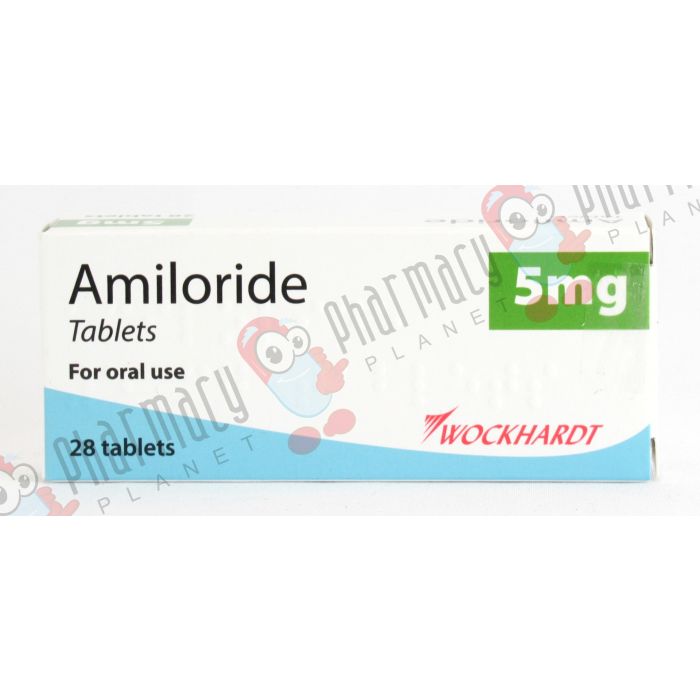
Amiloride tablets are yellow, round in shape, and marked ‘AML5’. These medications are available in pack sizes of 28, 56, and 84 tablets. The ingredients present in Amiloride tablets include amiloride hydrochloride, lactose monohydrate, starch, povidone, sodium starch glycollate, magnesium stearate, dispersed quinoline yellow lake E104, and isopropanol. This is a prescription medication used for treating hypertension and oedema, which is linked with conditions such as congestive heart failure, liver cirrhosis, kidney disease, and other related disorders.
Amiloride is a tablet-based high blood pressure medicine, Being a drug belonging to the group of potassium-sparing diuretics. Its action is expressed in contrasting the effects of aldosterone (a steroid hormone produced by the outer layer of the adrenal cortex) in the kidneys, thus promoting the elimination of sodium and water
These Blood pressure tablets work directly by blocking epithelial sodium channels, inhibiting reabsorption of this mineral in the kidneys. This results in the loss of water and sodium in the urine without causing a drop in blood potassium levels. Amiloride is frequently used in conjunction with thiazides or loop diuretics.
Due to its ability to "save potassium", hyperkalemia (high levels of potassium in the blood) is occasionally observed in patients receiving this diuretic. The risk is high in patients receiving ACE inhibitors (angiotensin-converting enzyme inhibitors) or spironolactone, as well as any other condition that predisposes to high potassium levels (hypoaldosteronism, advanced renal failure).
Amiloride can be used as a monotherapy (monotherapy) or an adjuvant treatment together with other diuretics (for example, hydrochlorothiazide, furosemide) for the treatment of ascites and edema (swelling), due to cirrhosis of the liver. The 2012 Clinical Practice Guidelines by the American Association for the Study of Liver Diseases (AASLD) states that amiloride can be used to treat ascites instead of spironolactone if not tolerated (for example, due to the side effect of gynecomastia. ), although amiloride is not a preferred medication due to cost and lack of efficacy.
As an adjunct to other diuretics, amiloride can be used to reduce edema due to heart failure or high blood pressure in people who have low blood potassium (hypokalemia) or in people for whom maintaining a normal level of Potassium is critically important to your health. For example, people who are taking Digitalis (i.e. digoxin) are at higher risk for changes in heart rhythm if their potassium levels are too high.
When combined with hydrochlorothiazide, the addition of amiloride had positive effects on blood pressure and blood sugar tolerance. Therefore, amiloride may be useful in preventing the metabolic side effects of thiazide diuretics, allowing the use of higher doses of thiazide (in line with how they were originally studied).
Amiloride is also used in the treatment of Liddle syndrome, a rare genetic disorder that causes mutations in the genes that code for the ENaC channel (where amiloride acts).
Amiloride comes as a tablet to take by mouth. It is usually taken once a day with food. To help you remember to take amiloride, take it at around the same time every day. Follow the directions on your prescription label carefully, and ask your doctor or pharmacist to explain any part you do not understand. Take amiloride exactly as directed. Do not take more or less of the medicine, or take it more often than directed by your doctor.
This medication controls high blood pressure and heart failure but does not cure these conditions. Continue to take amiloride even if you feel well. Do not stop taking amiloride without talking to your doctor.
Edema by cardiac insufficiency:
- Initial dose 1-2 tablets / 24h (5-10 mg of amiloride + 50-100 mg of hydrochlorothiazide), which can be reduced to a maintenance dose of 1 tablet / 24-48h. Maximum dose of 4 tablets/day (20/200 mg per day).
- Initial dose 1 tablet / 24h (5/50 mg once a day). Maximum dose 4 tablets / day (20/200 mg daily).
- Initial dose 1-2 tablets / 24h. Maximum dose 4 tablets / day (20/200 mg daily).
Amiloride can cause side effects. Tell your doctor if any of these symptoms are severe or do not go away:
- headache
- acidity
- loss of appetite
- sickness
- diarrhea
- vomiting
- gas
Some Side Effects Can Be Serious. If you experience any of these symptoms, call your doctor immediately:
- dry mouth, thirst, numbness and tingling, confusion, muscle weakness, stomach pain or cramps, rapid heart rate, and other signs of dehydration and electrolyte imbalance
- jaundice in skin or eyes
- chest pain
- rash
- itch
- urticaria
- difficulty breathing or swallowing
Amiloride may cause similar side effects if you are allergic to any of the ingredients in Amiloride.
Call your doctor if you have any unusual problems while taking this medicine.
You can buy Amiloride online through one of the UK’s leading online pharmacies, Pharmacy Planet. It's easy and convenient. You will need to fill out a short assessment and the item will be delivered directly to your door. If you want to buy Amiloride online, use Pharmacy Planet, a UK pharmacy you can trust.

Amiloride tablets are yellow, round in shape, and marked ‘AML5’. These medications are available in pack sizes of 28, 56, and 84 tablets. The ingredients present in Amiloride tablets include amiloride hydrochloride, lactose monohydrate, starch, povidone, sodium starch glycollate, magnesium stearate, dispersed quinoline yellow lake E104, and isopropanol. This is a prescription medication used for treating hypertension and oedema, which is linked with conditions such as congestive heart failure, liver cirrhosis, kidney disease, and other related disorders.
Amiloride has a weak effect and induces only mild diuresis. Therefore, it is mostly prescribed along with other diuretic agents, such as hydrochlorothiazide or furosemide etc., for more effective treatment in patients with hypertension.
If you think amiloride may not be suitable and are looking for alternatives, options such as lisinopril or amlodipine are used for treating high blood pressure. Before starting these medications, you must consult your healthcare provider to ensure it is safe to use.
Yes, amiloride is primarily used for hypertension, congestive heart failure, and oedema due to liver cirrhosis in the UK. Amiloride is also beneficial for other medical conditions such as Liddle Syndrome, Cystic fibrosis and pain management. However, these additional uses are supported by research, and amiloride is not approved yet for these conditions.
When amiloride hydrochloride is used alone, the initial adult dosage is usually 10 mg daily, which may be taken as a single dose or as 5 mg twice daily. Once diuresis is achieved, a maintenance dose of 5 mg may be prescribed to sustain the therapeutic effect.
Both amiloride and amlodipine are used to manage high blood pressure, but their working mechanisms are different. Amiloride is a potassium-sparing diuretic, which helps remove excess sodium and water from the body. Amlodipine is a calcium channel blocker that relaxes and widens blood vessels, improving blood flow. Your healthcare professional may prescribe both medications if blood pressure remains uncontrolled with a single medicine.
Yes, amiloride (a potassium-sparing diuretic) and furosemide (a loop diuretic) can be taken together to clear the excess fluids in the body. You must use this combination only if your healthcare provider prescribes it. Most side effects may not require medical attention, but it's important to monitor your condition during treatment.

clinical consultation
Answer a few questions on your health and your fitness goals.

assessment
Our clinicians will review your clinical questionnaire to make sure treatment is right for you.

aboard!
Once approved, you will access our wealth of experience and resources curated by our team and begin your clinical journey.
Start your journey with us
Need Help?

Start your weight loss journey heading in the right direction. Our team are here to help. Whether you’re unsure about which medicine is right for you or need help navigating the world of weight loss drugs, our team are on hand to help you make the right decision. We can put you in touch with one of our experienced weight loss clinicians so you can be sure you’re making the best decision with the most accurate information.
To get in touch, contact our Customer Service team on 0800 978 8956 or email [email protected].

Authored on : August 13 2025
HARMINDER ‘HARMY’ KAUR
BSc(hons) Pharmacy
GPhC Number: 2061107

Reviewed on : August 13 2025
GURDEV SEHMI
BSc Pharm, MRPharmS, Independent Prescriber, Superintendent Pharmacist, Clinical Lead
2050925